Teach your dog to sit
The first trick every dog learns. The gateway to obedience.
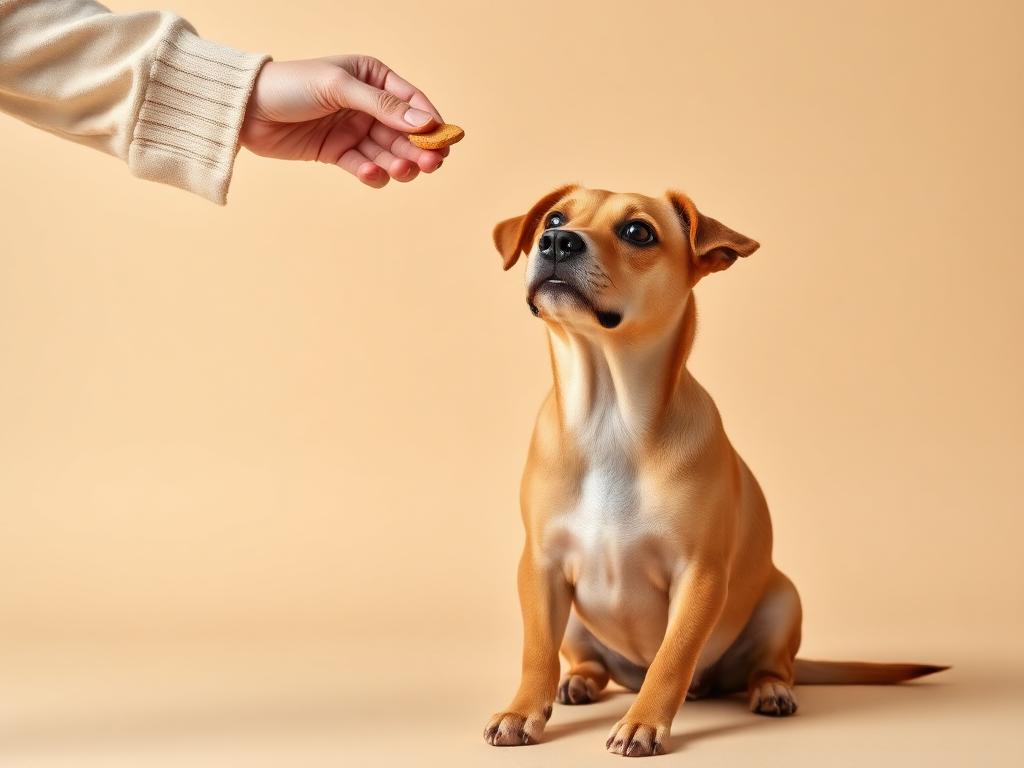
Sit is the easiest cue to teach and the most useful one day to day: before crossing the street, before the food bowl goes down, before going out. A dog that knows sit knows how to wait — and a dog that knows how to wait is a well-mannered dog.
What you get
- Replaces jumping on guests
- Control point before crossing
- Calms the dog in excited moments
- Foundation for down, stay and shake
A dog that sits on cue is a dog you can give instructions to. Without it, everything else is improvisation.
Before you start
- · Knows his name
- · Mild appetite (not just fed)
Materials
- · Small soft treats
- · Quiet place with no distractions
Step by step
- 1
Get his attention
Call your dog by name and wait for him to look at you. If he doesn't, move a treat near your face until he locks eyes.
- 2
Lure over his head
Hold the treat just above his nose and slowly move it backwards, over his head. His body follows his nose and naturally drops into a sit.
- 3
Mark and reward
The exact moment his butt touches the floor, say "yes!" or click the clicker and give the treat. Timing is everything — it has to happen in that second.
- 4
Add the word
Repeat 5-10 times. When he does it fluently, introduce the word "sit" right before luring. After 3-4 sessions, he associates the word with the action.
- 5
Fade the lure
Do the same hand motion with an empty hand. If he sits, treat from the other hand. The goal is for the empty hand to become a visual cue, then just the word alone.
- 6
Generalize
Practice in different rooms, then in the garden, finally on the street with distractions. Each new context counts as starting from scratch for the first few minutes.
Common mistakes
- Repeating "sit-sit-sit" instead of rewarding the first success
- Pushing his butt down (creates resistance)
- Rewarding late, when he's already stood up again
If something isn't working
He lies down instead of sitting
→ You're moving the treat too high or too far back. Lower it and slow down.
He jumps for the treat
→ Treat is too far away. Keep your hand glued to his nose from the start.
Pro tips
- Train before meals, not after — motivation is higher.
- Ask for sit before anything your dog wants (door, toy, food) — natural reinforcement.
Deep dive
Teaching a dog to sit is the foundational exercise of positive reinforcement training. It takes less than three sessions in any breed, from Chihuahua to Great Dane, and becomes the foundation for more complex cues like down, shake or wait. The key is reward timing and repetition across different contexts.
Other exercises in this level
Teach your dog to lie down
The calm cue. For terraces, cafés and quiet evenings.
Teach your dog to come when called
The most important cue you will ever teach. Literally.
Teach name recognition
The cornerstone of attention. Before any cue, comes this.
Teach your dog to stay
Three variables: duration, distance, distraction. One at a time.