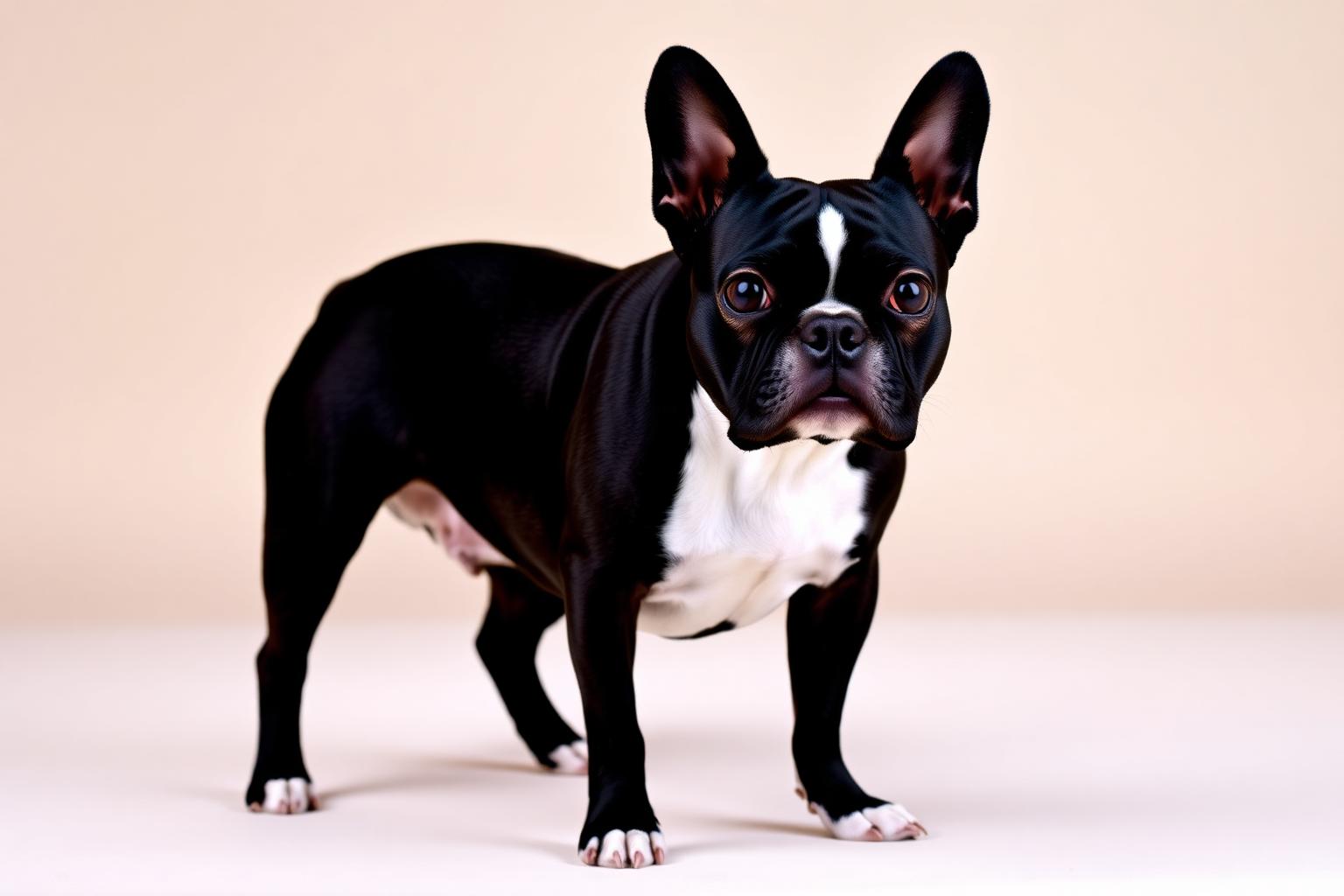
Boston Terrier
"The dapper Gentleman of dogs: polite, playful, and perfect for city life."
Overview
The Boston Terrier is an incredibly versatile companion, making it an ideal choice for modern families. Weighing just 5 to 11 kilos, this small dog breed thrives whether you live in a bustling city apartment or a suburban house. They offer a brilliant big-dog personality without being overly yappy.
To keep them happy, they need about 45 minutes of daily exercise. This moderate energy level means they enjoy a brisk walk or a game of fetch just as much as curling up on the sofa during homework time.
They are genuinely excellent with children, acting as sturdy playmates for older kids and gentle companions around toddlers. However, their prominent eyes are vulnerable to accidental pokes, so teaching kids safe play is essential.
Training is straightforward because they are an eager-to-please and highly trainable dog, responding beautifully to positive reinforcement. Parents will also appreciate their short coat, which comes with very low shedding, though you should know they are not hypoallergenic.
Crucially, families must be mindful of their flat faces. As a brachycephalic breed, they are highly sensitive to both heat and cold, requiring extra care during extreme weather. Budgeting around €140 a month ensures they get the care they need to be a devoted, lifelong shadow to your family.

Key facts
- Size
- Small
- Weight
- 5–11 kg
- Life expectancy
- 11–13 years
- Daily exercise
- 45 min/day
- Estimated total
- 140€/month
- Country
- USA
Character & temperament
The Boston Terrier is the definition of a balanced dog. They possess a keen intelligence and a natural desire to be part of the family circle. Unlike some terriers that can be independent or stubborn, the Boston is highly attuned to its owner's emotions. If you are happy, they are ready to play; if you are stressed, they will likely sit quietly by your side. They are known for their 'comic' nature, often performing silly antics or making expressive faces that keep the household entertained.
With strangers, they are typically polite and welcoming. While they might bark to announce a visitor, they usually transition quickly into 'best friend' mode once introduced. They lack the suspicion of many guardian breeds, making them excellent choices for families who have frequent guests or live in busy neighborhoods. They are social butterflies that generally enjoy the company of people of all ages, provided the approach is friendly.
To their owners, they are fiercely loyal and affectionate shadows. They are known to follow their favorite person from room to room, not out of anxiety, but out of a genuine desire for companionship. They are sensitive dogs; a harsh word can hurt their feelings, so they respond best to positive reinforcement. This 'velcro' nature makes them incredibly rewarding pets for those who want a deep, interactive bond with their dog.
Their signature trait

Living with children
Boston Terriers are legendary family dogs. For school-aged children (6-12) and teenagers, they are near-perfect companions—sturdy enough for a game of fetch in the yard, but calm enough to hang out while kids do homework. They are remarkably patient and rarely snappy, which makes them a safe choice for active households. Their size is a plus: they are small enough for a child to walk (with supervision) but not so delicate that they live in constant fear of being stepped on.
With toddlers and babies, the Boston is generally gentle and curious. However, parents should be mindful of the 'zoomies'—those sudden bursts of energy where the dog runs at full speed—which could accidentally knock over a small child. The most important rule is teaching children to respect the dog's personal space and, specifically, to avoid touching or poking their eyes. Because their eyes are so prominent, they are more susceptible to injury during rough play. As with any breed, supervision is mandatory, but a Boston usually becomes a child's most devoted protector and playmate.
With other pets
Bostons generally get along well with other pets. Most share their home with other dogs without issue, though some males can be slightly 'bossy' if not neutered. Because their hunting drive is lower than that of many other terriers, they usually live peacefully with cats, especially if introduced during puppyhood. They might try to play with a cat that doesn't want to, so managing those initial interactions is key. With very small pets like hamsters, they should be supervised, but they are far less likely to have a high prey drive than a Jack Russell or a Fox Terrier.
Health & prevention
The Boston Terrier's unique look comes with specific health responsibilities. As a brachycephalic (flat-faced) breed, they are prone to Brachycephalic Obstructive Airway Syndrome (BOAS), which can cause snoring and difficulty breathing in heat or during intense exercise. Their large, 'pop-out' eyes are also vulnerable to corneal ulcers, cataracts, and glaucoma. Regular vet visits should focus on heart health and patellar luxation, a common condition where the kneecap slips out of place.
Prevention is key: keep your Boston at a healthy weight to reduce respiratory strain and use a harness instead of a collar to protect their trachea. Annual eye exams by a specialist are highly recommended. While they are generally sturdy, ignoring their breathing sounds or eye redness can lead to expensive surgeries. Most healthy Bostons live a full, happy life of 12 years if they are protected from extreme weather and obesity.
Health risks
- •Brachycephalic syndrome
- •Sensitive eyes
Care
Nutrition
A Boston Terrier needs high-quality dry food formulated for small breeds, ideally split into two meals to prevent bloating. Since they are prone to obesity and flatulence, look for recipes with highly digestible proteins and limited fillers like corn or soy. An average 7-9 kg Boston requires about 120-150 grams of kibble per day, but this varies with activity level. Be very careful with treats; their expressive eyes are masters at begging, but even a few extra kilos can severely impact their ability to breathe comfortably. Many owners find grain-free or 'sensitive stomach' diets help reduce the breed's notorious gas issues.
Grooming & hygiene
This is a low-maintenance breed. A weekly brushing with a rubber mitt or soft bristle brush is enough to remove loose hair and keep the coat shiny. They don't have a strong 'doggy smell,' so a bath every 4-6 weeks is sufficient. The most critical grooming task is daily cleaning of the facial folds to prevent infections and checking their eyes for redness or debris, as their prominence makes them magnets for dust and scratches. Monthly nail trimming is also essential.
Exercise & training
Exercise plan
A Boston Terrier needs about 45 minutes of activity daily. Mon-Fri: Two 20-minute brisk walks in the morning/evening to avoid peak heat, plus indoor play. Sat: A focused 45-minute social session at a park or a low-intensity hike. Sun: Mental stimulation day with sniff-games and short outdoor strolls. Always carry water and avoid exercise above 25°C (77°F). Mental puzzles are just as important as physical walks for this 'American Gentleman' to prevent boredom-induced chewing.
Training
Training a Boston Terrier is generally a joy because they are highly motivated by praise and food. They are smarter than they look and pick up basic commands very quickly—often within 5-10 repetitions. However, they can be sensitive; using a heavy-handed approach will cause them to shut down. Focus on short, 10-15 minute sessions packed with positive reinforcement. One challenge can be housebreaking, which sometimes takes longer than in other breeds—consistency and a strict schedule are vital here. They also benefit from early socialization to refine their manners around other dogs, ensuring they remain the 'gentlemen' they are meant to be rather than getting too rowdy during play.
Monthly cost
Monthly costs focus on high-quality diet and health insurance, which is vital due to potential respiratory or eye issues. Professional grooming is rarely needed.
Estimate for Spain, healthy adult dog. Varies by region and provider.
Pros & cons
Pros
- ✓Extremely adaptable to apartment living and city environments.
- ✓Very low grooming requirements and generally clean habits.
- ✓Friendly and social with strangers and other animals.
- ✓Highly intelligent and eager to please, making training easy.
- ✓Compact and sturdy, making them great travel companions.
Cons
- !Highly sensitive to extreme temperatures, especially heat exhaustion risk.
- !Prone to flatulence and snoring due to their facial structure.
- !Eye injuries are common because of their prominent, exposed eyes.
- !Can be stubborn or 'deaf' to commands when they lose focus.
- !Requires careful weight management to avoid joint and breathing issues.
Ideal for
- • Urban dwellers living in apartments who want a polite, quiet neighbor.
- • First-time owners looking for an affectionate and highly trainable companion.
- • Families with school-aged children who want a sturdy but small playmate.
- • Seniors who can provide frequent companionship and moderate daily walks.
Not recommended for
- • Extreme sports enthusiasts looking for a running or hiking partner in high heat.
- • Families away from home for more than 8-10 hours every day.
- • Budget-conscious owners who cannot afford potential specialized vet care.
How it fits each scenario
Perfect apartment dogs due to their size and low barking, provided they get their daily outdoor fix.
They enjoy a yard but must live indoors; they are not 'outside dogs' under any circumstances.
Dangerous territory; their flat faces make cooling down difficult. Air conditioning is a must.
Low tolerance; their short coat means they absolutely need sweaters or coats for winter outings.
Good, but their 'zoomies' might knock over a toddler; supervision is required to protect the dog's eyes.
An ideal companion; they are sturdy enough for games and gentle enough for school-aged focus.
An excellent first-time dog; they are manageable, eager to please, and adapt easily to routines.
Friendly for all, but experienced owners will better navigate their potential health challenges.
Great for active families who enjoy walks, but they won't keep up on long runs or mountain hikes.
They can handle a typical workday alone but crave human interaction and shouldn't be left for 10+ hours.
Not hypoallergenic; they shed short, stiff hairs that can embed in fabrics despite their sleek look.
Purchase price and health premiums can be high, so they aren't the cheapest breed to maintain properly.
Origin & history
The Boston Terrier's journey began in late 1860s Boston, Massachusetts. Its ancestor, a dog named 'Judge' who was a cross between an English Bulldog and the now-extinct White English Terrier, was sold to Robert C. Hooper. Initially, the breed was much heavier and was bred for pit fighting, but through careful selection and crossing with French Bulldogs, the breed’s size was reduced and its temperament softened significantly. By 1893, it became the first American breed to be recognized by the American Kennel Club. Over the decades, it transformed from a 'scrappy' fighter into the refined, gentle companion we know today, retaining its sturdy build but losing all aggression.
The Boston Terrier was the first breed developed in the United States to be officially recognized by the AKC, earning them the nickname 'The American Gentleman'.
Frequently asked questions
How much does a Boston Terrier puppy cost?▾
Currently, a healthy puppy from a reputable breeder in Spain ranges between €1,200 and €1,800. Be wary of lower prices, as they often come from environments that don't screen for hereditary eye or heart issues.
Are they good for people with allergies?▾
They are not hypoallergenic. While they have short coats and no undercoat, they still produce dander and shed moderately year-round. They are better than a Husky, but not safe for severe allergy sufferers.
Do Boston Terriers bark a lot?▾
Generally, they are quiet. They usually bark only when someone is at the door or during intense play. This makes them one of the best 'polite' breeds for apartment living and close neighbors.
Is the Boston Terrier good with children?▾
They are excellent for families. They combine the sturdiness of a terrier with the gentleness of a companion dog, though kids must be taught to be careful with the dog's prominent eyes.
What is their average lifespan?▾
Usually 11 to 13 years. A healthy diet and keeping them at a lean weight can extend this, as obesity is very hard on their restricted respiratory systems.
How do they handle the heat?▾
Heat is their biggest enemy. Because of their short snouts (brachycephaly), they cannot pant efficiently to cool down. In Spanish summers, walks must be very early or very late.
Is it a good dog for a first-time owner?▾
Yes, they are highly recommended for beginners. They are portable, social, and much easier to train than other bull-type breeds or more stubborn terriers.
How much exercise do they really need?▾
They need about 45-60 minutes divided into several walks. They aren't marathon runners, but they have 'zoomies' or bursts of energy where they love to fetch or play indoors.
Similar family-friendly breeds

French Bulldog
7.8Affectionate, calm and perfect for apartments. Suffers with heat and cold. High vet costs.

Pug
7.7Small family clown. Adores children. Suffers in extreme temperatures. Sheds a lot.

Boxer
8.9Athletic and patient with children. Known as a nanny dog. Needs intense exercise and early socialization.