
Dalmatian
"An endurance athlete for active families with a passion for spots."
Overview
The Dalmatian is far more than a famous spotted face from the movies; they are true high-performance athletes. Originally bred to run tirelessly, this large-sized endurance dog is strictly suited for a house with a secure garden rather than a small apartment. They need a highly active family, as their intense daily exercise needs must be met to keep them from becoming bored or destructive indoors.
When considering life with kids, their boisterous nature makes them brilliant companions for older, active children who love running and learning tricks. However, parents of toddlers should be careful; their energetic and bouncy temperament means they can easily knock over small kids by accident simply by wagging their tail.
At home, they become affectionate "velcro dogs" but can be quite aloof with outsiders. To prevent protective instincts from turning into shyness, early socialisation and training are absolutely essential during their first year.
Maintenance goes beyond their sleek coats, as parents must handle constant year-round shedding that will cover clothes and carpets. Families should budget for an estimated monthly cost of €165, keeping in mind that the breed is unfortunately prone to specific health issues like congenital deafness and urinary stones.
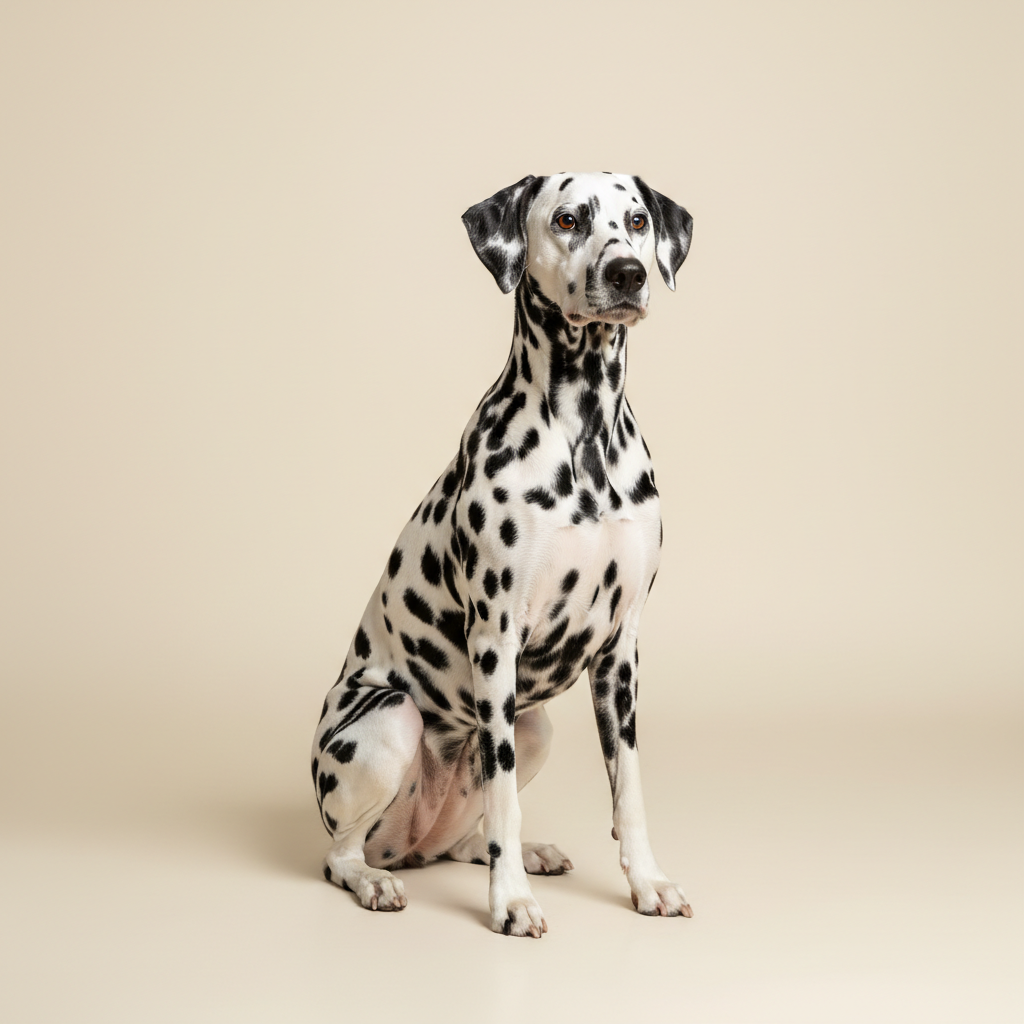
Key facts
- Size
- Large
- Weight
- 20–32 kg
- Life expectancy
- 11–13 years
- Daily exercise
- 90 min/day
- Estimated total
- 165€/month
- Country
- Croatia / United Kingdom
Character & temperament
The Dalmatian is a dog of contrasts: incredibly energetic outdoors but capable of being a 'velcro dog' inside. They are highly intelligent and sensitive, meaning they pick up on their owner's emotions quickly. They have a strong personality and a streak of independence, often deciding that their way is better than yours. This isn't disobedience, but rather the trait of a dog bred to make decisions while running miles away from its handler.
With strangers, Dalmatians are typically reserved or aloof. They lack the 'everyone is my best friend' attitude of a Golden Retriever. They are excellent watchdogs, alert and protective without being unnecessarily aggressive. Early socialization is paramount to ensure this natural caution doesn't turn into shyness or reactivity. They need to meet many people and see different environments during their first year to build confidence.
With their owners, they are deeply affectionate and even needy. They want to be involved in every family activity. Many Dalmatians are known for 'smiling'—a submissive grin where they show their front teeth when happy or guilty. It’s a charming breed trait, but often misunderstood by those who don't know the breed. They thrive on companionship and will mope or become destructive if relegated to the backyard or ignored.
Living with children
Dalmatians can be wonderful companions for children, but age matters. For older children (6-12 years) and teenagers, they are perfect partners for games of fetch, running in the yard, and learning tricks. Their energy matches that of an active child. However, they are very 'bouncy' and physical. They often don't realize their size or strength, which can be problematic with toddlers (under 5). A happy Dalmatian can accidentally knock over a small child with a wagging tail or an excited jump.
Supervision is always mandatory. Because they are sensitive and sometimes aloof, they may not tolerate the ear-pulling or rough handling that toddlers often inflict. If a Dalmatian is raised with children from puppyhood and the children are taught to respect the dog's space, the bond is unbreakable. But for a family with a 2-year-old and no previous large-dog experience, the Dalmatian's intensity might be overwhelming. They need a home where rules are clear for both kids and canines.
With other pets
Generally, Dalmatians get along well with other dogs, especially if socialized early. They were bred to work in teams with horses, so they often show a natural affinity for large animals and can thrive in a farm environment. With cats, their high prey drive can be an issue; they might chase them for fun. However, if raised with a cat from a young age, they usually coexist peacefully. Small pets like hamsters or birds should be kept secure, as the Dalmatian's hunting instincts are still very much alive. Indoor peace depends largely on the dog being sufficiently exercised outside.
Health & prevention
The Dalmatian has two major health hurdles. First is congenital deafness; about 30% of puppies are affected to some degree. Responsible breeders perform BAER tests at 5-6 weeks. Never buy a puppy without these papers. Second is their unique urinary system. Unlike other dogs, they excrete uric acid, which can form stones (urolithiasis). This can be life-threatening if it blocks the urethra. Look for 'LUA' (Low Uric Acid) Dalmatians, which are the result of backcrossing to eliminate this genetic trait.
Regular vet visits should include annual urinalysis to check for crystals. They also have a predisposition to skin allergies and hip dysplasia, though the latter is less common than in other large breeds. With proper management of their diet and hearing, they can live a full 12-13 years, but parents must be aware that a 'cheap' puppy often comes with hidden genetic costs that appear in adulthood.
Health risks
- •Congenital deafness
- •Urinary stones
Care
Nutrition
Dalmatians require a diet specific to their unique uric acid metabolism. You must avoid high-purine ingredients such as organ meats (kidney, liver), game meat, and certain fish like sardines or mackerel. High-quality kibble with moderate protein levels, often based on chicken or lamb, is usually best. Crucially, they must have access to fresh water at all times to flush their system. On average, an active adult weighs 25kg and needs about 300-350g of high-quality food daily, split into two meals. Consult your vet about 'urinary' formulas if crystals are detected.
Grooming & hygiene
Grooming is deceptive. While they don't need professional haircuts, they shed year-round and require daily brushing with a rubber curry comb to manage the 'snowfall' of white hair. Their skin can be sensitive, so use hypoallergenic shampoos. Keep their ears clean to prevent infections (otitis), especially since they are prone to allergies. A bath every 6-8 weeks is usually enough, but expect to vacuum your house daily. The investment is small in tools (brush and shampoo) but high in home maintenance time.
Exercise & training
Exercise plan
The Dalmatian is an endurance athlete, not a sprinter. Monday-Friday: 60-90 minutes of active walking or jogging. Weekend: 2-hour hikes or trail running to burn off steam. Include mental stimulation like scent work (finding hidden treats) and agility training to keep their sharp minds occupied. They make excellent partners for marathon runners or long-distance cyclists once they reach adulthood (avoid forced running before 18 months).
Training
Training a Dalmatian requires a 'firm but fair' approach. They are intelligent enough to learn quickly but independent enough to ignore cues if they find something more interesting. Harsh methods or shouting will cause a sensitive Dalmatian to shut down or become stubborn. Focus on positive reinforcement (treats, praise, play). Consistency is the biggest hurdle; if you let them jump on the sofa once, they will remember it forever. Sessions should be short and varied to prevent boredom. They excel in Agility, Flyball, and obedience trials when motivated correctly. Expect a solid 6-12 months of daily focused work to get a reliable off-leash recall, which is essential given their high prey drive and desire to run.
Monthly cost
The main cost factor is high-quality low-purine food to prevent urinary stones, plus regular BAER testing in puppies and annual urine analysis.
Estimate for Spain, healthy adult dog. Varies by region and provider.
Pros & cons
Pros
- ✓Impossibly loyal and devoted to their family unit.
- ✓Athletic and tireless, perfect for active outdoor enthusiasts.
- ✓Striking and unique appearance that turns heads.
- ✓Strong natural watchdog instincts without being overly barky.
- ✓Generally very clean dogs with little 'doggy odor'.
Cons
- !Constant shedding of stiff white hairs that stick to everything.
- !High risk of congenital deafness in one or both ears.
- !Genetic predisposition to urinary stones requiring a specific diet.
- !Extremely high energy levels that can lead to destructive behavior.
- !Can be overly boisterous and 'jumpy' for very young children.
Ideal for
- • Active runners or hikers looking for a tireless companion.
- • Families with older, energetic children who love outdoor sports.
- • People with a large, securely fenced garden and plenty of time.
- • Experienced owners who understand positive reinforcement and patience.
Not recommended for
- • Sdentary households or those living in small apartments without park access.
- • Families with very small children or toddlers who might be knocked over.
- • First-time owners who are not prepared for intensive training and health care.
How it fits each scenario
Possible only if you spend 2-3 hours outside daily; otherwise, they become destructive.
Ideal, provided the garden is high-fenced and they aren't just left there alone.
They handle heat well due to their short coat, but avoid peak sun hours.
Moderate; their thin coat offers little protection, so they need jackets in winter.
Risky; their 'bouncy' nature and strength can easily knock over a small child.
Great companions for active older children who can participate in their training.
A huge challenge; their energy and specific health needs can overwhelm beginners.
Highly recommended; an expert will handle their stubborn streak and high drive better.
A perfect match; this dog will never tire before you do on a mountain trail.
Not ideal; they suffer when left alone and need significant time investment for exercise.
Not recommended; they shed short, stiff hairs year-round that are hard to remove.
Risky; the potential for urinary surgeries and special diets can be expensive.
Origin & history
The Dalmatian's history is as spotted as its coat. While its name comes from the Dalmatia region in Croatia, the breed was refined in Great Britain. They were the ultimate 'carriage dogs,' serving a dual purpose: their striking looks added prestige to the aristocracy's coaches, while their stamina and protective instincts kept the horses safe from stray dogs and highwaymen. This unique heritage explains their affinity for horses even today. Later, they became famous as firehouse mascots in the US, where they ran ahead of horse-drawn fire engines to clear the path. They are born hunters, guardians, and athletes.
Dalmatians were 'coach dogs' trained to run alongside horse-drawn carriages to protect them from stray dogs and highwaymen.
Frequently asked questions
How much does a Dalmatian puppy cost in Spain?▾
Expect to pay between €1,200 and €1,800. It is crucial to buy from breeders who provide BAER test results for deafness and check the parents' genetic history regarding uric acid levels. Cheap puppies often end up costing more in vet bills.
Is it true that many Dalmatians are deaf?▾
Approximately 10-12% of Dalmatians are born deaf in both ears, and up to 20-25% in one ear. Always ask for the BAER test. Unilaterally deaf dogs live normal lives, but bilaterally deaf dogs require expert handling and hand-signal training.
Are Dalmatians good for people with allergies?▾
They are not hypoallergenic. In fact, they are 'heavy shedders'. Their hair is like little needles that weave into fabrics. If you have allergies or are a 'clean freak', this is not the breed for you.
Is it a good dog for a family with small children?▾
For older children (6+), they are fantastic playmates. However, for toddlers, they can be 'too much'. They are very physical, jump a lot when excited, and don't realize their own strength, which can be scary for a 2-year-old.
How much exercise do they really need daily?▾
You need to plan for at least 90 minutes of vigorous activity. A simple walk around the block isn't enough. They need to run, play with other dogs, or engage in canine sports like Agility or Canicross.
Are they difficult to train?▾
They are smart but independent and can be stubborn. They don't respond well to harsh corrections. Use positive reinforcement and start socialization from day one to avoid over-protection or shyness.
Do they bark a lot or are they noisy?▾
Generally, they are not excessive barkers, but they will alert you to strangers. Some Dalmatians 'smile' (showing teeth in a submissive grin) or make 'talking' noises when excited, which can be mistaken for growling.
What specific health problem should I watch for?▾
They have a unique metabolism that produces uric acid instead of urea, leading to kidney or bladder stones. They must drink plenty of water and eat a diet low in purines (avoiding red meats and certain organs).
Similar family-friendly breeds

Vizsla
8.0Athletic, affectionate and very attached. Only for active families: needs 2 hours of daily exercise.
Weimaraner
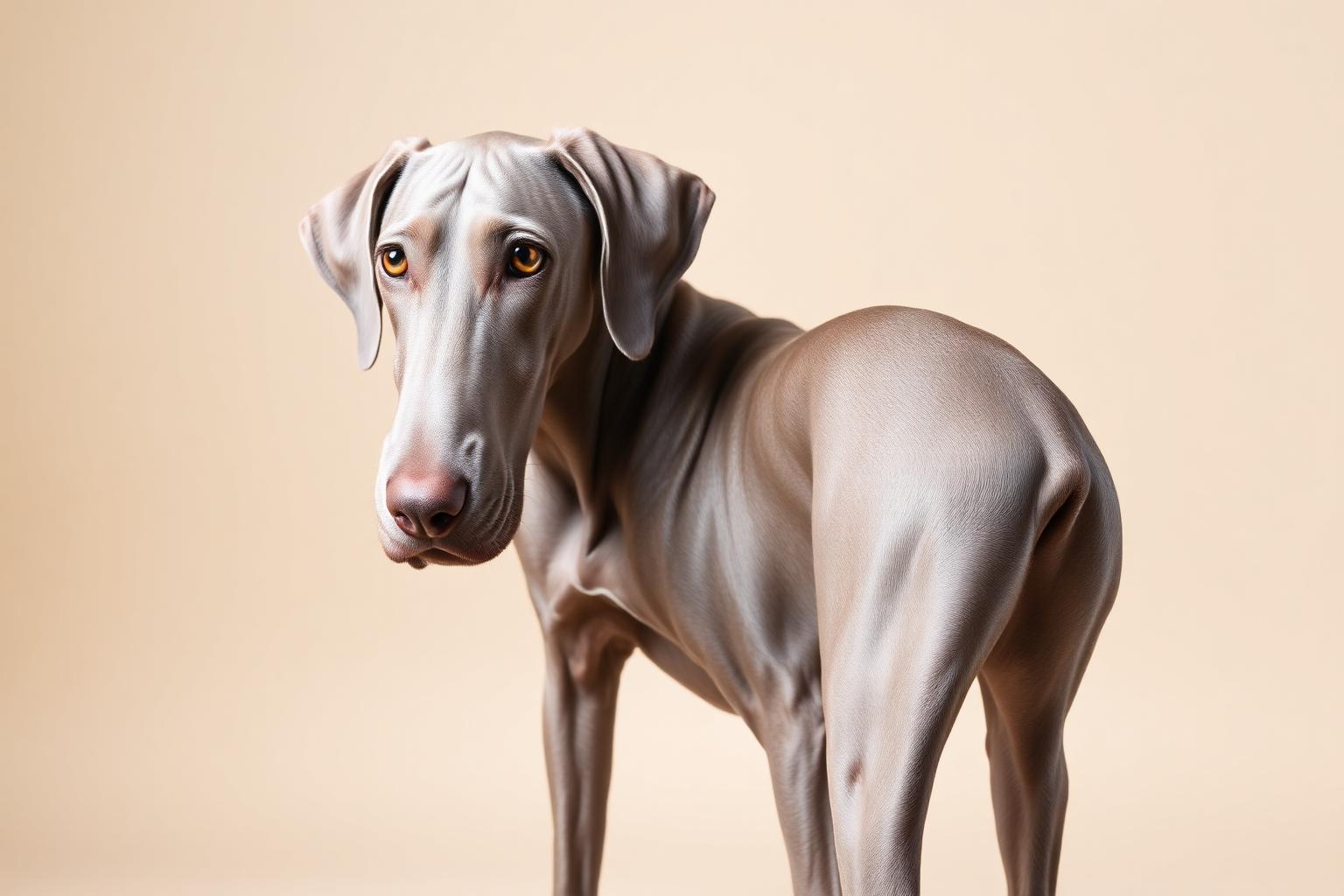
6.3Tireless blue-eyed hunter. Only for very active families with time to spare.

Boxer
8.9Athletic and patient with children. Known as a nanny dog. Needs intense exercise and early socialization.