
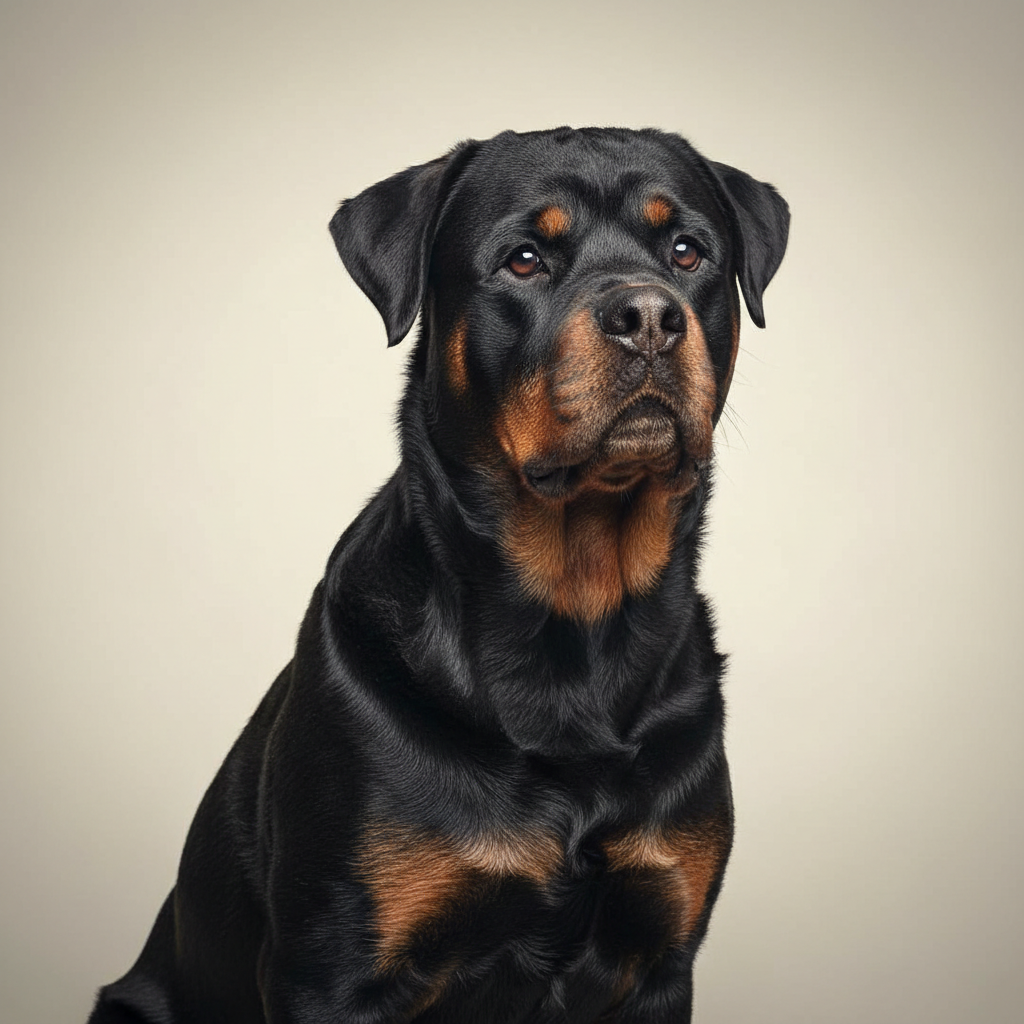
Rottweiler
"A gentle giant's heart protected by a warrior's strength and devotion."
Overview
The Rottweiler is a powerhouse of devotion that challenges every aggressive stereotype with its remarkably calm and steady nature. For a family, this breed acts as a courageous guardian and a surprisingly tender "velcro dog" that craves physical closeness, often leaning its heavy weight against its owner's legs to show affection. However, potential owners must recognize that living with a dog of this strength requires a firm, consistent leader and a lifestyle that includes the dog in daily routines. They are not solitary backyard animals; isolation can lead to anxiety and destructive behaviors.
When it comes to children, the Rottweiler exhibits a legendary patience with its own "pack," though their 50kg frame makes them a risky choice for homes with toddlers who might be accidentally knocked over. In many regions, they fall under restricted breed laws (PPP), which entails specific legal responsibilities, mandatory insurance, and the use of muzzles in public. Socialization must begin the very day they arrive home to ensure their natural watchfulness doesn't turn into suspicion. They are intelligent, observant "thinkers" who respond best to positive reinforcement rather than harsh corrections.
Health and maintenance for a Rottweiler require a significant financial commitment. They are predisposed to hip dysplasia and certain cancers, and their deep chests put them at risk for life-threatening gastric torsion. Owners should budget for high-quality nutrition to prevent obesity, which is devastating for their heavy joints. While their short coat is easy to brush, they do shed significantly twice a year. If you can dedicate the time to professional training and regular exercise, you will find a protector whose loyalty is absolute and whose "Rottie-rumble" of contentment is the soul of the home.
Key facts
- Size
- Large
- Weight
- 35–60 kg
- Life expectancy
- 8–11 years
- Daily exercise
- 75 min/day
- Estimated total
- 195€/month
- Country
- Germany
Character & temperament
A balanced Rottweiler is an oasis of calm. They are not naturally nervous or frantic; instead, they possess a 'wait-and-see' attitude towards life. This means they observe quietly before reacting, showing great confidence and poise. In the home, they are often surprisingly silly and vocal, making 'grumbling' sounds (the famous Rottie-rumble) which is an expression of contentment, not a growl. They are deeply bonded to their house and will naturally guard it without being taught, although this instinct must be managed to prevent over-protectiveness.
With strangers, the Rottweiler is typically aloof. They do not need to make friends with everyone they meet on the street and prefer a polite distance. They will assess a newcomer carefully. If their owner accepts the person, the dog will usually relax, but they rarely seek affection from people outside their inner circle. This discretion makes them excellent watchdogs, but it also necessitates thorough socialization to ensure that their natural wariness doesn't turn into unnecessary suspicion or aggression towards neutral visitors.
With their owners, they are absolute shadows. They thrive on physical contact and will often lean their full weight against your shins—a classic sign of affection and claims of 'you are mine'. They are highly sensitive to the emotions of their family; if you are stressed, they will notice and try to soothe you. Despite their tough exterior, they are sensitive dogs that do not handle harsh corrections well; they shut down if treated unfairly. Their loyalty is absolute, and they will literally put their lives on the line for their human pack if they perceive a real threat.
Living with children
Rottweilers are famous for being patient with 'their' children. With older, school-aged kids (6-12) and teenagers, they are fantastic companions who will follow them everywhere and even protect them. They can handle a bit of rougher play, although it's crucial to teach children never to play 'aggressive' games with them. The dog sees these children as siblings and usually forms an unbreakable bond. They are often surprisingly gentle, adjusting their strength when interacting with the younger members of the household they know well.
However, caution is needed with toddlers and infants. A 50kg Rottweiler can accidentally knock over a toddler without even noticing. Their protective instinct can also be misinterpreted during 'play-dates'; if they see a visiting child wrestling with 'their' child, they may intervene to protect their own, which can be dangerous. They are not recommended for homes with very small children unless the parents are expert handlers and have separate areas for the dog. Every interaction must be supervised by an adult—this is a rule for the safety of both the child and the dog's reputation.
With other pets
Rottweilers can live peacefully with other pets if introduced early. If they grow up with a cat, they will likely see it as part of their pack and protect it. However, they can be dominant with other dogs of the same sex, especially males. At the park, they might not be 'social butterflies'; they often prefer to ignore other dogs. Early socialization is vital to ensure they don't develop dog-aggression. With small animals like rabbits, their prey drive might kick in, so secure enclosures and careful management are necessary. Always introduce new pets slowly and on neutral ground when possible.
Health & prevention
As a vet, I must be honest: Rottweilers have some serious genetic predispositions. Hip and elbow dysplasia are common, so always ask breeders for certified scores. They also have one of the highest rates of Osteosarcoma (bone cancer) among all breeds, which often appears in their senior years. Heart conditions like Subaortic Stenosis are also a concern. Another critical issue is Gastric Dilatation-Volvulus (Bloat); because of their deep chests, they can suffer a twisted stomach after eating or drinking too quickly. Preventive measures include using slow feeders and avoiding exercise an hour before and after meals. Regular screenings and keeping your Rottweiler at an ideal weight—never obese—can significantly extend their quality of life. Expect frequent, slightly more expensive vet visits due to the dosage of medication required for their size.
Health risks
- •Hip dysplasia
- •Osteosarcoma
- •Heart problems
Care
Nutrition
A Rottweiler's diet should be strictly controlled to prevent obesity, which is devastating for their joints. They need high-quality protein (around 24-26%) and balanced fats. An adult will consume between 500g and 700g of dry food daily, divided into at least two meals to prevent bloat. Look for kibble that includes glucosamine and chondroitin for joint support. Avoid 'free-feeding' at all costs. Since they are prone to food allergies and sensitive stomachs, a grain-free or limited-ingredient diet is often beneficial. Keep treats to a minimum and always account for them in their total daily calorie intake.
Grooming & hygiene
Grooming is straightforward but necessary. They have a short, dense double coat that needs a good brushing at least twice a week to manage shedding and keep the skin healthy. During seasonal sheds (Spring and Autumn), daily brushing is a must to prevent your house from being covered in black hair. Bathe them once every 6-8 weeks; their skin can be sensitive to over-washing. Pay special attention to their large, strong nails; if you hear them clicking on the floor, they are too long. Keeping them short is crucial for joint health in such a heavy breed. Cost is low unless you use professional groomers for convenience.
Exercise & training
Exercise plan
A Rottweiler needs about 75 minutes of daily structured activity. Monday to Friday: Two 30-minute brisk walks plus 15 minutes of obedience or tug-of-war. Saturday: A long hike or 90-minute walk in a safe environment. Sunday: Mental stimulation day with scent games or food puzzles at home to rest the joints. Physical exertion must be balanced with mental training to prevent boredom-induced destruction. Avoid high-impact jumping on hard surfaces to protect their heavy joints from early wear.
Training
Training a Rottweiler is a marathon, not a sprint. They are highly intelligent and eager to please, but they also have a mind of their own and can be stubborn if they don't see the point of a command. Use positive reinforcement and high-value rewards (food or toys). Harsh corrections will only damage the trust bond. Socialization is the most critical part of their training; they must be exposed to different environments, sounds, people, and animals before 16 weeks of age. Adolescence (8 to 18 months) is a testing time where they might challenge boundaries; consistency is key. Daily 15-minute sessions are better than long, boring ones. Professional puppy classes are mandatory to ensure they learn to focus around other dogs.
Monthly cost
Costs focus on high-quality large-breed protein and the mandatory liability insurance required by Spanish law for this breed. Vet costs fluctuate due to weight-related medication pricing.
Estimate for Spain, healthy adult dog. Varies by region and provider.
Pros & cons
Pros
- ✓Incredibly loyal and dedicated to their family unit.
- ✓Calm and quiet indoors if their exercise needs are met.
- ✓Naturally protective and an excellent visual deterrent for security.
- ✓High intelligence and desire to work make them very trainable.
- ✓Very affectionate 'velcro' dogs that love physical closeness.
Cons
- !Legally restricted in many regions (PPP), requiring expensive licenses and insurance.
- !High potential for dominance if not trained with firm, consistent leadership.
- !Relatively short lifespan and prone to expensive health issues like bone cancer.
- !Intense shedding twice a year despite the short coat.
- !Can be overly protective or territorial without extensive early socialization.
Ideal for
- • Experienced owners who understand canine leadership and socialization.
- • Families with older children/teenagers who want a loyal, protective companion.
- • People with a large home and an active but structured lifestyle.
- • Owners committed to professional training and legal compliance.
Not recommended for
- • First-time owners or those with a passive personality.
- • Families with very small children (toddlers) or elderly people at risk of falls.
- • People who travel often or cannot dedicate time to daily training and socialization.
How it fits each scenario
Possible if very well exercised, but their size makes small spaces feel cramped quickly.
Ideal, but they must live as family members inside, never relegated to just 'guarding' outside.
Risk of overheating is high; avoid exercise during peak sun hours and provide shade.
They handle cold well thanks to their undercoat, though they should sleep indoors.
Risk of accidental knocking over due to size; strict supervision and separate areas are mandatory.
Great companions for older kids who know how to respect a dog's personal space.
Generally not recommended due to their strength and the required legal and training complexities.
Highly recommended; they need someone who understands canine body language and pack dynamics.
Perfect match, they thrive on hiking and long walks as long as you respect heat limits.
Avoid; they need significant time for training and social interaction to stay stable.
Not recommended; they produce dander and shed quite a bit twice a year.
Expensive to own; food, insurance, and potential vet bills for large breeds add up fast.
Origin & history
The Rottweiler's ancestors were the drover dogs of Ancient Rome, used to herd cattle and guard supply trains across the Alps. When the Romans settled in the region of Rottweil, Germany, these dogs interbred with local breeds. For centuries, they were known as 'Rottweiler Metzgerhund' (Butchers' Dogs), used to drive cattle to market and protect the money earned, which was tied in pouches around their necks. With the advent of the railroad, their herding role diminished, but their intelligence and strength led them to new careers as some of the first police and military dogs in the early 20th century. Today, they remain one of the most versatile working breeds in the world.
In the Middle Ages, Rottweiler owners would hang their money pouches around the dog's neck. No thief was brave enough to try and steal from a 'Rottie' bodyguard!
Frequently asked questions
Is it true that I need a special license to own one?▾
In Spain, the Rottweiler is classified as a Potentially Dangerous Dog (PPP). This means you must obtain a municipal license, pass a psychological test, have no criminal record, and maintain a specific liability insurance policy. In public, they must always wear a muzzle and a short, non-extensible leash. Failure to comply can lead to heavy fines.
Are they safe dogs to have around small children?▾
Rottweilers are incredibly loyal and protective of 'their' children. However, due to their 50kg+ weight, they can accidentally hurt a toddler just by turning around. They are best suited for families with children over 6-7 years old who can participate in training and respect the dog's boundaries. Always supervise interactions.
How much exercise do they really need every day?▾
While they love exercise, Rottweilers don't need to run for hours. They need structure. Two or three 30-minute walks with training sessions (sit, stay, heel) are more tiring for them than just running. They appreciate hiking but are prone to overheating, so avoid intense midday activity in summer.
Is a Rottweiler a good choice for a first-time dog owner?▾
Generally, no. As a first-time owner, you might struggle with their strength and the 'testing' phase of adolescence. They need someone confident who uses positive reinforcement but remains firm. If you are a first-timer, hire a professional trainer from day one to ensure a balanced adult dog.
Do they bark a lot or are they noisy dogs?▾
Rottweilers are usually quiet at home. They aren't 'nuisance barkers' who bark at every leaf that falls. However, they will bark deeply and loudly if they sense a threat to their territory or family. If they are barking, it's usually worth investigating why. Proper socialization reduces unnecessary alert barking.
I have allergies, is this breed okay for me?▾
They are not hypoallergenic. They have a double coat and shed moderately throughout the year, with heavy shedding twice annually. Their dander levels are standard for large dogs. If someone in the house has asthma or pet allergies, a Rottweiler will likely trigger symptoms. Daily brushing during shedding season helps but doesn't solve it.
What are the most common health problems in Rottweilers?▾
The main health concerns are hip and elbow dysplasia, heart issues (Subaortic Stenosis), and a high incidence of Osteosarcoma (bone cancer). They also have a deep chest, making them prone to Gastric Torsion (bloat), which is a life-threatening emergency. Regular vet checks and keeping them lean are vital for their health.
How long do they usually live?▾
Sadly, like many large breeds, they have a shorter lifespan, typically between 8 and 11 years. Some reach 12 with excellent nutrition and preventive care, but you must be prepared for the emotional toll of a shorter journey compared to smaller breeds. Quality of life over quantity is the mantra here.
Similar family-friendly breeds

Boxer
8.9Athletic and patient with children. Known as a nanny dog. Needs intense exercise and early socialization.

Bullmastiff
6.8Massive, calm-at-home guardian. Affectionate with family, wary with strangers.

Golden Retriever
9.8The quintessential family companion: patient, sociable, and always up for play. Excellent with children and easy to train.