
Beagle
"The Beagle: Friendly, curious, and always ready for adventure."
Overview
The Beagle is one of the most beloved dog breeds, known for its medium size, cheerful and curious nature, and exceptional sense of smell. Originating from the United Kingdom, this hound was bred for hunting, which influences many of its current characteristics. Its friendly nature makes it an excellent family dog, especially valued for its good disposition with children. Beagles are playful and full of energy, always ready for an adventure. However, their scent tracking instinct is very powerful, making good training and socialization from puppyhood fundamental. They are intelligent dogs but can be stubborn when an interesting scent captures their attention, a trait owners must learn to manage with patience and positive reinforcement. They need a considerable amount of daily exercise to stay physically and mentally healthy, making them ideal companions for active families who enjoy long walks and outdoor activities. Lack of exercise and stimulation can lead to undesirable behaviors such as excessive barking or destructiveness. In terms of health, Beagles are generally robust, with a life expectancy of 12 to 15 years. However, they are prone to obesity due to their voracious appetite, so a controlled diet is crucial. It is also important to pay attention to their ears (predisposition to infections) and eyes. Their grooming maintenance is relatively low, requiring weekly brushings for their short coat. Those interested in a Beagle should consider their need for companionship, as they do not like to be alone for long and can develop separation anxiety. A well-cared for Beagle devoted to its family will be a loyal and lively companion, adding joy and dynamism to any home.

Key facts
- Size
- Medium
- Weight
- 9–14 kg
- Life expectancy
- 12–15 years
- Daily exercise
- 75 min/day
- Estimated total
- 140€/month
- Country
- Reino Unido
Character & temperament
The Beagle is a breed overflowing with personality and energy. They are known for being extremely friendly and sociable dogs, which makes them ideal companions for most families. Their curious and playful nature means they are always ready for an adventure or a game, but they can also be stubborn when their powerful sense of smell detects an interesting trail. This quality, inherited from their hunting ancestors, often causes them to ignore their owners' calls if they are engrossed in following a scent. They are very expressive dogs, communicating with a variety of sounds including barks, bays, and whimpers, which can be charming for some and a challenge for others, especially in apartments. Beagles thrive on companionship; they dislike being alone for long periods and can develop separation anxiety or destructive behaviors if left unattended. They need daily mental and physical stimulation to burn off their inherent energy. Their intelligence, though sometimes overshadowed by their stubbornness, means they respond well to positive training methods and reinforcement. They are loyal to their family, always seeking affection and a good lap to cuddle on at the end of the day. A well-socialized Beagle is a balanced, cheerful, and affectionate companion who will bring much fun and love into their home.
Their signature trait
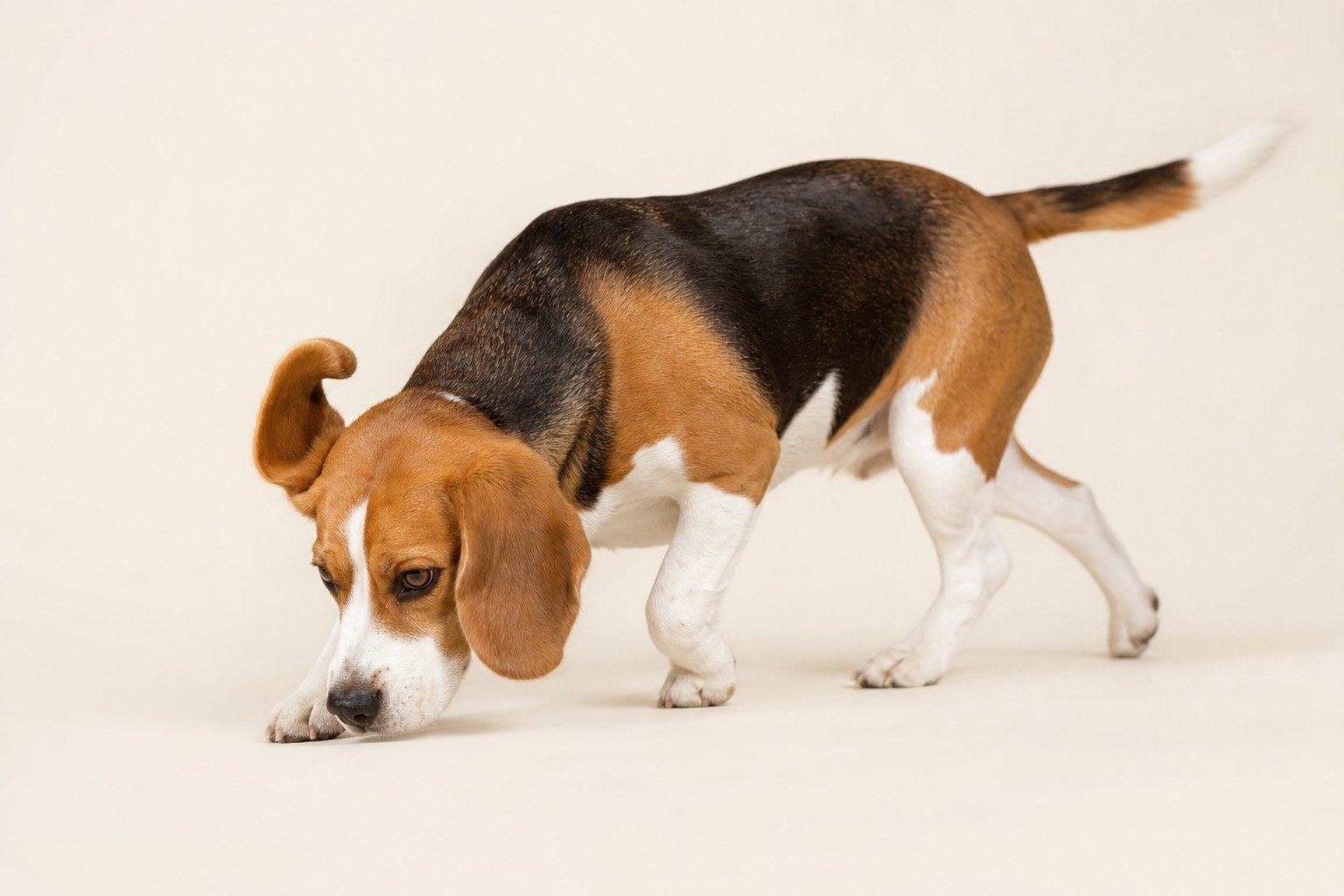
Living with children
Beagles are known for their excellent temperament with children, making them a very popular choice for families. They are playful, patient, and good-natured, characteristics that allow them to interact wonderfully with the little ones at home. Their medium size is ideal, as they are not so large as to intimidate small children, but sturdy enough to withstand energetic play. They are often seen as the perfect playmate, always ready to run, chase balls, or simply cuddle on the sofa. However, as with any breed, supervision of dog-child interactions is crucial, especially with infants or very young children, to teach both to respect each other and avoid accidents due to over-enthusiasm. It's important to educate children on how to approach and play with the dog appropriately, and the Beagle on basic manners and respecting children's space. Their tolerant nature means they are rarely aggressive, but their patience threshold should not be tested. A Beagle well-socialized from puppyhood with children of different ages will adapt easily, forming strong and lasting bonds with each family member. Their need for exercise is also an advantage, as they can be great motivators for children to spend active time outdoors.
With other pets
Beagles, being pack hounds by nature, generally get along very well with other dogs. Their sociability makes them enjoy canine company, and they rarely show aggression towards other canines. In fact, they often prefer to live in a home with another dog, especially if they spend time alone. However, their prey drive can be a challenge with smaller animals like cats, rodents, or birds. With early and careful socialization, a Beagle can learn to coexist peacefully with a cat if they grow up together. Introduction should always be gradual and supervised. With caged animals, the risk is higher, and leaving a Beagle alone with these pets is not recommended. Beagles can be the perfect addition to a multi-dog household, bringing joy and energy.
Health & prevention
Beagles are generally robust dogs, with a lifespan of 12 to 15 years. However, they are prone to certain health conditions that prospective owners should be aware of. One of the most common concerns is obesity, as they have a voracious appetite and can easily gain weight if their diet and exercise are not controlled. This can lead to other health problems such as diabetes, heart disease, and joint issues. They are also susceptible to eye problems like glaucoma and progressive retinal atrophy, and "Cherry Eye" (prolapse of the nictitans gland). Ear infections are common due to their long, floppy ears that trap moisture and dirt. Other issues can include hypothyroidism, epilepsy, and to a lesser extent, hip or elbow dysplasia. Degenerative myelopathy and certain neurological syndromes are less common but possible. Regular veterinary check-ups, a balanced diet, and adequate exercise are crucial to keeping a Beagle in optimal health.
Health risks
- •Ear infections
- •Obesity
- •Disc problems
Care
Nutrition
The **nutrition of the Beagle** is fundamental for their health and well-being, especially because they are prone to obesity. They should receive a high-quality diet, appropriate for their age, activity level, and size. It is ideal to opt for kibble formulated specifically for medium or active breeds. Due to their insatiable appetite, it is crucial to precisely measure daily portions and avoid overfeeding or free access to food. Treats should be used in moderation and as part of their total caloric intake. For Beagles with high activity, they may require a higher caloric density, but most household Beagles will benefit from a controlled diet to maintain a healthy weight. Fresh, clean water should always be available.
Grooming & hygiene
Beagle grooming is relatively straightforward due to their **short, dense coat**. A weekly brushing with a rubber mitt or a soft-bristle brush is sufficient to remove loose hair and distribute natural skin oils, keeping their coat shiny and healthy. Although they shed moderately year-round, this brushing helps minimize it. Baths should not be too frequent, only when necessary, to avoid drying out their skin. Regular cleaning of their **long, floppy ears** is essential to prevent infections, as moisture and dirt can easily accumulate. Their nails should be trimmed every 3-4 weeks or when heard clicking on the floor, and frequent dental checks and brushing are recommended to maintain good oral hygiene.
Exercise & training
Exercise plan
Beagles are **energetic and active** dogs who require a significant amount of daily exercise to stay happy and healthy. They need a minimum of 60 minutes of vigorous activity, spread across several sessions throughout the day. This can include long walks, running, playing in a fenced yard, or participating in activities like obedience training, agility, or scent work. A bored or under-exercised Beagle can become destructive, bark excessively, or develop separation anxiety. Due to their strong tracking instinct, it is crucial that walks are on a leash, unless in a secure, fenced area. Consider scent games or hiding food to stimulate their minds and satisfy their innate need to search.
Training
Beagle **training** can be challenging due to their inherent stubbornness and strong scent drive. However, they are intelligent dogs who respond very well to **positive reinforcement** methods, using treats and praise. Consistency and patience are key. It is essential to start socialization and obedience training from an early age to establish boundaries and teach basic manners. Training should be fun and varied to maintain their interest, as they get bored easily with repetition. Scent games and food puzzles are excellent for stimulating their minds. A good recall training is vital, but even with it, a Beagle may ignore a command if a strong scent catches its attention, so it should never be trusted off-leash in unsafe places. Managing their tendency to bark or bay is also part of their training.
Monthly cost
Costs reflect average health maintenance for a medium dog, but food intake must be strictly monitored to avoid obesity-related expenses.
Estimate for Spain, healthy adult dog. Varies by region and provider.
Pros & cons
Pros
- ✓Extremely friendly and sociable with people and other dogs.
- ✓Excellent companion for families with children, patient and playful.
- ✓Manageable size, suitable for various types of homes.
- ✓Requires relatively low grooming maintenance.
- ✓Full of energy and enthusiasm, ideal for active owners.
Cons
- !Prone to baying and barking, which can be an issue if living in an apartment.
- !Strong scent drive, may ignore commands if following a scent.
- !Demanding of exercise and mental stimulation to prevent boredom.
- !Propensity for obesity if diet is not strictly controlled.
- !Can suffer from separation anxiety if left alone for long periods.
Ideal for
- • Active families who enjoy outdoor activities.
- • People willing to invest time in consistent socialization and training.
- • Homes with other dogs (potentially, with initial supervision).
- • Owners who value a dog with a cheerful and affectionate personality.
Not recommended for
- • Very busy families who cannot dedicate time to exercise.
- • People looking for a quiet dog, due to their tendency to bay.
- • First-time owners without patience or training experience.
- • Homes where the dog will spend most of the day alone.
How it fits each scenario
Possible, but the Beagle needs rigorous daily exercise, and baying can be an issue. Not ideal for small apartments without easy access to green areas.
Ideal, especially if the garden is well-fenced. A garden provides space to burn energy, but it's not a substitute for leash walks.
They tolerate warm climates if they have shade and fresh water. Avoid intense exercise during the hottest hours to prevent heatstroke.
Their short coat offers little protection. They need a coat in low temperatures and shouldn't stay outside for long in cold climates.
Generally very patient, but constant supervision is required to ensure safe interactions and teach both to respect boundaries.
Excellent playmate and adventure companion. Their energy aligns well with school-aged children for games and outdoor activities.
Possible, but requires a strong commitment to training, socialization, and exercise. Thorough research of the breed is crucial.
An excellent companion for experienced owners who understand the need for scent drive management and consistent training.
This is one of the best combinations. A Beagle will fit perfectly into an active family that provides regular exercise and mental stimulation.
Not ideal. A Beagle needs a lot of companionship and attention. A family with little time will cause the dog to become bored and develop behavioral problems.
Not hypoallergenic. They shed moderately year-round, which can be an issue for people with mild to moderate allergies.
Food costs must be controlled to prevent obesity, which can drive up vet expenses. Consider insurance costs.
Origin & history
The Beagle has a rich history dating back to medieval England, with small hounds used for hunting hares. The word 'beagle' may have derived from the Gaelic 'beag' (small) or the French 'be'geule' (open mouth, referring to their baying). Throughout the centuries, they were popular among nobility, especially with Queen Elizabeth I. The modern breed was standardized in the 19th century, setting its appearance and friendly temperament, while retaining its keen sense of smell and stamina. They were primarily used in packs for hunting on foot, pursuing small prey like rabbits and hares. In America, their popularity grew as a companion dog.
The Beagle has around 220 million olfactory receptors! To put it in perspective, humans only have 5 million. This explains their incredible ability to track scents and their constant need to sniff everything around them.
Frequently asked questions
Is the Beagle a dog that barks a lot? How can I manage it?▾
Yes, Beagles are known for being vocal. In addition to barking, they have a characteristic baying sound that they used to alert during hunting. This behavior is innate, but it can be moderated. Consistent training from puppyhood, focusing on 'quiet' or 'no bark' commands, along with sufficient physical and mental exercise, can help reduce the frequency. Ignoring barks for attention and rewarding silence are effective techniques. If barking is due to separation anxiety, addressing the root cause is crucial.
Are Beagles good with small children or babies?▾
Beagles are generally excellent with children, famous for their patience and playful nature. However, as with any breed, interactions between dogs and infants or small children should always be supervised to ensure the safety of both. It's important to teach children to interact respectfully with the dog and the Beagle basic manners. A well-socialized Beagle that grows up with children tends to form strong and protective bonds, becoming an ideal family companion.
How much exercise does a Beagle need per day?▾
A Beagle needs a considerable amount of daily exercise, about 60-90 minutes of vigorous activity, preferably divided into several sessions. They enjoy long walks, running, and playing in a safe space. Exercise is crucial not only for their physical health but also for their mental stimulation, preventing boredom that can lead to destructive behaviors. Their strong tracking instinct means walks must be on a leash in unfenced or very secure areas.
Are Beagles suitable for first-time owners?▾
They can be, but they require a committed, patient, and informed first-time owner. Beagles are intelligent but also stubborn and easily distracted by scents. They need consistent and positive training, as well as abundant socialization and exercise. If a first-time owner is willing to dedicate the necessary time and effort to understand and meet the Beagle's specific needs, they can be wonderful companions. Without this commitment, behavioral challenges may arise.
What health problems are common in Beagles?▾
Beagles are generally healthy, but they are prone to obesity if their diet and exercise are not controlled. Other common problems include ear infections (due to their floppy ears), eye problems like glaucoma and "Cherry Eye", and some genetic conditions like hypothyroidism and epilepsy. Regular veterinary check-ups are vital for early detection and management of any condition. Maintaining a healthy weight is key to preventing many of these ailments.
Can Beagles be left alone for long periods?▾
Beagles are social dogs who dislike solitude. If left alone for many hours, they can develop separation anxiety, which manifests as excessive barking, baying, destructiveness, or house soiling. If you work full-time and cannot provide companionship or a dog walker, this breed might not be the most suitable. It is ideal for them to have company, either human or another dog, to prevent behavioral problems.
How to deal with the Beagle's strong scent drive?▾
The scent drive is a fundamental part of the Beagle's identity. A Beagle should never be walked off-leash in unfenced or trafficked areas, as they may follow a scent and get lost. Use a long leash in secure parks to give them freedom without risk. Activities like nose work or detection games are excellent for satisfying this instinct in a controlled way and stimulating their minds, channeling their searching energy positively.
I need to know about basic Beagle care at an average cost.▾
The average monthly expenses for a Beagle usually amount to around 140 euros (food: 40€, basic vet: 50€, grooming (minimal): 15€, insurance: 20€, extras: 15€). It is crucial to invest in good quality food to prevent obesity, which can lead to significant veterinary expenses. Annual visits for vaccinations and deworming are essential, and don't forget initial costs for acquisition, bed, toys, leash, and bowls. Caring for their ears and teeth is vital to avoid future problems and expenses.