Borzoi
"Aristocratic grace, serene loyalty: a majestic Russian soul."
Overview
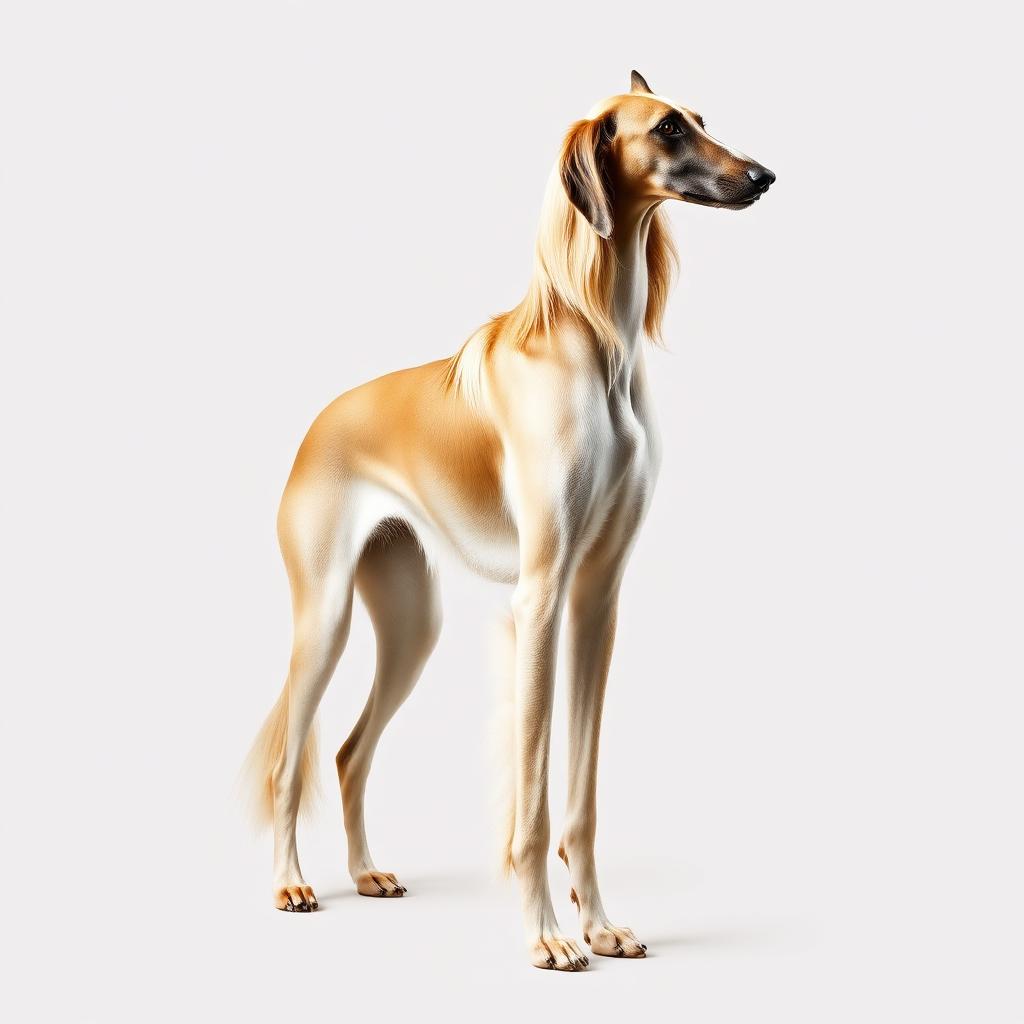
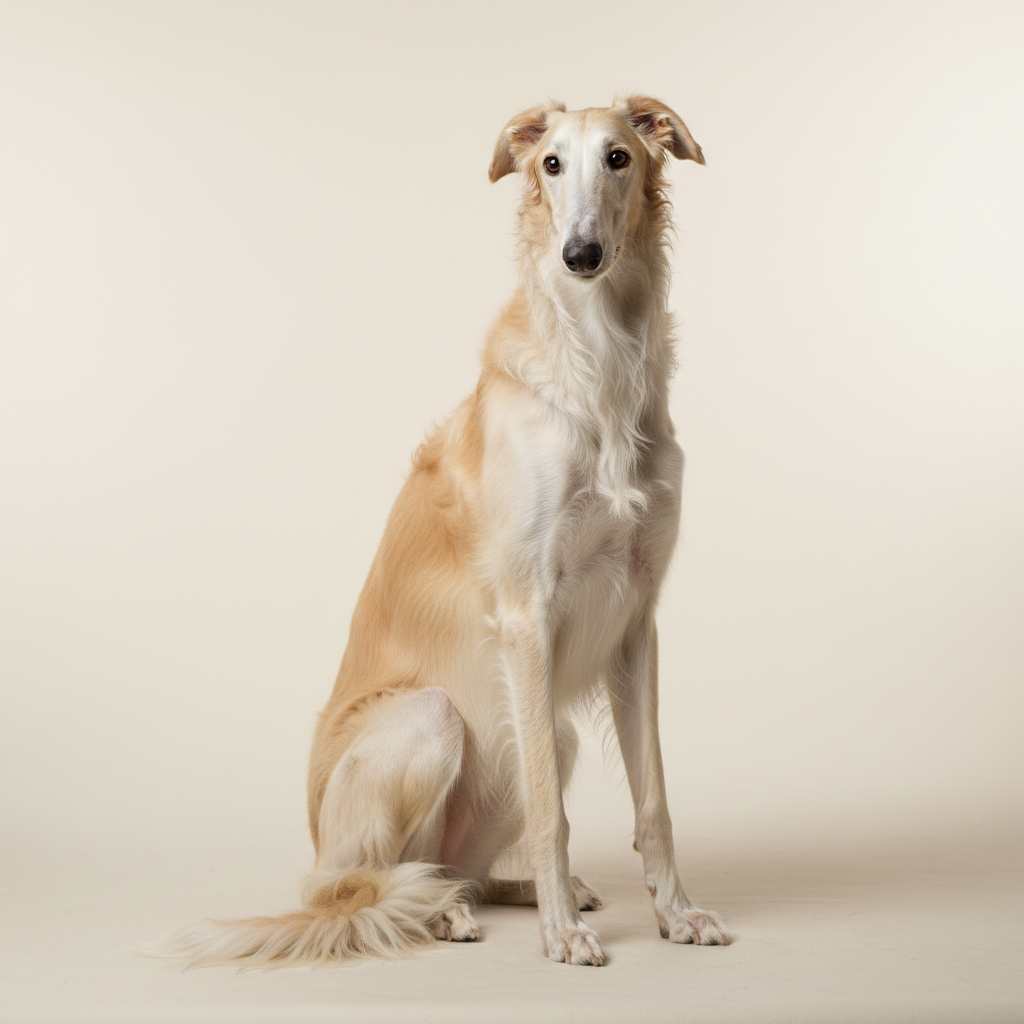
The Borzoi, also known as the Russian Wolfhound, is a giant-sized dog breed renowned for its aristocratic elegance and strong hunting instinct. Originating in Russia, where it was bred by the nobility for wolf hunting, this sighthound impresses with its slender silhouette, silky coat, and graceful movements. Despite its hunter origins, the Borzoi temperament at home is surprisingly calm, dignified, and affectionate with its family, making it an excellent domestic companion. They are dogs that enjoy comfort and serenity, often seeking a cozy spot to rest. Their independence is a distinctive characteristic, meaning that Borzoi training requires patience, consistency, and a positive approach. They are not the most obedient breed in the traditional sense, prioritizing their own view of the world and reacting strongly to their prey drive. Therefore, leash control is essential, and exercise must be carried out in safe, fenced areas to prevent them from chasing small animals.
Regarding living with children, the Borzoi can be a good companion for older, respectful children, always under supervision. Their large size could cause accidental knockdowns with very young children. With other pets, early socialization is key; their hunting instinct can make coexistence with cats or other small species difficult if not raised with them from puppyhood. Borzoi health requires special attention. They are predisposed to gastric torsion (GDV) and certain heart conditions, as well as sensitivity to anesthesia. A high-quality diet for large breeds and regular veterinary check-ups are essential. Borzoi coat care is moderate; regular brushing helps keep it clean and free of tangles, especially during shedding seasons. In summary, the Borzoi is a majestic and loyal dog that, with the right environment and an experienced owner who understands its unique needs, provides serene and rewarding companionship.
Key facts
- Size
- Giant
- Weight
- 27–48 kg
- Life expectancy
- 9–14 years
- Daily exercise
- 60 min/day
- Estimated total
- 235€/month
- Country
- Rusia / Russia
Character & temperament
The Borzoi is a dog of complex and fascinating character. At home, they are quiet, dignified, and surprisingly delicate despite their imposing size. They are known for their sweet and affectionate nature with their family, often showing a gentle and playful side. They are not dogs that constantly seek attention but prefer to observe and participate discreetly in family activities. Their independence is a distinctive characteristic; they are not always obedient in the traditional sense but tend to make decisions based on their own understanding. This is not stubbornness, but a manifestation of their intellect and their history as autonomous hunters. With strangers, they are usually reserved and distant, not aggressive, but also not effusive. They require time to trust and establish a connection. Their intelligence is sharp, although sometimes masked by their apparent indifference. They are sensitive to punishment and prefer a positive and patient training approach. Aggression is very rare in this breed; their nature is rather to avoid confrontation. They are dogs that value peace and quiet, often seeking their own space to rest. Their general temperament is one of calm and serenity, but it should not be forgotten that beneath that appearance of gentleness and sophistication, the heart of a fast-reacting hunter with astonishing speed still beats. Adapted to the family environment, they prove to be loyal and silent companions, capable of understanding and adapting to household dynamics with innate grace.
Living with children
Living with a Borzoi and children can be wonderful if the right foundations are established from the start. They are large dogs, but generally considered gentle and patient, more tolerant than many other breeds of their size. However, their size and 'sighthound' nature mean they can be unintentionally clumsy, especially with small children, whom they might accidentally knock over during play. Therefore, adult supervision is crucial, especially when Borzois are puppies or very young and still learning to control their strength. They are not the most suitable breed for rough or very active games with children; they prefer calmer and more respectful interactions. Children must be taught to interact with the Borzoi calmly, respecting its space and treating it gently. They should learn not to bother the dog while it eats or sleeps, and not to pull its fur or ears. A Borzoi well-socialized from puppyhood and raised with children can become a loyal and protective companion, though always somewhat reserved. They often form a special bond with children, treating them with surprising sweetness. For families with active children looking for a constant playmate, the Borzoi might not be the first choice, as their explosive energy is usually in short bursts, followed by periods of rest. However, for children who understand and appreciate the quieter, dignified nature of a dog, a Borzoi can be a faithful and majestic friend.
With other pets
Coexistence of the Borzoi with other pets requires careful consideration and early socialization. Due to their strong prey drive, they may view small animals such as cats, rabbits, or rodents as potential prey. If a Borzoi is raised with these pets from puppyhood and taught to coexist peacefully, coexistence is possible, but never to be fully trusted, and supervision is always advisable. With other dogs, they generally get along well, especially with other sighthounds. However, their size and dignified demeanor can intimidate smaller dogs. Early socialization with a variety of dogs and situations is key to ensuring positive interaction. It is important to introduce them slowly and in a controlled manner.
Health & prevention
The Borzoi is generally a robust breed, but like many large dog breeds, they are prone to certain health conditions. The most concerning is gastric dilatation-volvulus (GDV), known as bloat or stomach torsion, which is a life-threatening veterinary emergency. To prevent it, it's advisable to divide meals into several small portions throughout the day and avoid intense exercise after eating. They can also be susceptible to heart problems, such as dilated cardiomyopathy. Regular cardiac check-ups are recommended. Bone and joint diseases like hip and elbow dysplasia are less common than in other giant breeds, but can occur. Anesthesia sensitivity is an important factor to consider for any surgical procedure; they have low body fat levels and doses must be carefully adjusted. Some Borzoi may experience hypothyroidism. Eye problems, though less frequent, should also be monitored. A high-quality diet, regular exercise, and preventive veterinary visits are crucial to maintaining their optimal health. The average lifespan of a Borzoi is 10 to 12 years.
Health risks
- •Gastric torsion
- •Heart disease
- •Anaesthesia sensitivity
Care
Nutrition
Borzoi nutrition must be carefully planned to support their growth and maintenance as a giant breed. They require a high-quality diet, rich in animal protein and healthy fats, formulated for large breeds. It is crucial to avoid overly rapid growth in puppies to prevent bone and joint problems, opting for specific giant breed puppy foods that control growth rate. Dividing daily rations into two or three meals is essential to reduce the risk of gastric torsion, a significant concern in this breed. The Borzoi's activity level will influence the amount of food, but generally, an adult typically needs between 3 and 5 cups of quality dry food per day, adjusted according to weight, metabolism, and age. Always ensure constant access to fresh water. Consulting with a veterinarian for a personalized nutritional plan is always the best option.
Grooming & hygiene
The Borzoi's beautiful silky coat requires regular, though not overly demanding, maintenance. Their medium-to-long double coat needs brushing at least two or three times a week to prevent tangles, remove dead hair, and maintain its luster. During shedding seasons, brushing frequency should be increased to daily. Baths can be given monthly or every two months, or when necessary, using a mild, dog-specific shampoo that won't dry out their skin. It's important to dry them thoroughly to prevent skin problems. Additionally, attention should be paid to dental hygiene, with regular brushing to prevent tartar buildup and periodontal disease. Nails should be trimmed every 3-4 weeks to prevent overgrowth which can cause discomfort or deformities. Ears should be checked weekly for signs of infection and cleaned if necessary. Proper coat care and general hygiene will maintain your Borzoi's beauty and health.
Exercise & training
Exercise plan
Despite their size and history as high-speed hunters, the Borzoi is surprisingly calm indoors. However, don't be fooled, they need regular exercise and opportunities to run and stretch their long legs. Ideally, a routine of two or three daily walks of at least 30 minutes, complemented by the chance to run freely in a safe, fenced area at least a couple of times a week. They are natural sprinters, not long-distance endurance runners, so they enjoy short bursts of speed. It is crucial that any area where they run off-leash is completely fenced, as their strong prey drive will lead them to chase anything that moves at high speed, ignoring calls. They are not suitable for off-leash running in public parks or unfenced areas. A Borzoi that does not receive enough exercise can become restless or destructive. Adequate exercise contributes to their physical and mental well-being.
Training
The Borzoi is intelligent but often described as 'independent' or 'willful' in training. They are not the easiest breed to train for infallible obedience, as their sighthound instinct leads them to make their own decisions, especially if they spot something they perceive as prey. Training must be reward-based, positive, and patient, starting from a very young age. Coercive or harsh training methods will not work with a Borzoi; they will only make them more distant and distrustful. Early and extensive socialization is crucial to accustom them to different people, places, and sounds. Recall training is vital, but even with the best training, their prey drive is so strong that they should never be trusted to return if they've spotted something they consider prey. Therefore, leash walking and exercise in fenced areas are essential. The key to training a Borzoi is patience, consistency, and an understanding of their unique nature, focusing on building a relationship of mutual respect.
Monthly cost
Being a giant dog means everything intrinsically costs more: pharmaceutical doses, the needed premium food, and strict preventatives. It is totally fundamental to maintain top insurance robustly covering invasive surgeries.
Estimate for Spain, healthy adult dog. Varies by region and provider.
Pros & cons
Pros
- ✓Extremely elegant and majestic, an impressive addition to any home.
- ✓Calm and gentle temperament indoors, excellent companions for family life.
- ✓Relatively low constant exercise requirements; rather demand short, fast sprints.
- ✓Infrequent barkers, ideal for those seeking a quiet dog.
- ✓Form very strong and loyal bonds with their families.
Cons
- !Strong prey drive, requiring careful outdoor management.
- !Anesthesia sensitivity and proneness to gastric torsion (GDV).
- !Require space to run and a fenced yard is a must.
- !Can be aloof with strangers and are not always effusive.
- !Their training requirements demand patience and understanding; they are not the most obedient.
Ideal for
- • Families that value elegance and calmness in a dog.
- • Experienced owners familiar with sighthound breeds or independent temperaments.
- • Homes with large spaces and access to safe, fenced areas for running.
- • Individuals who can dedicate time to regular grooming of their coat.
Not recommended for
- • Those looking for a guard dog or overly protective dog.
- • Families with very young children who cannot respect their space.
- • People who want a dog that obeys commands to the letter.
- • Homes with cats or other small pets without prior rigorous socialization.
How it fits each scenario
A Borzoi can live in an apartment if provided with ample daily physical activity outside, including the opportunity to run in a safe and fenced space. They are calm dogs indoors.
This is the ideal environment for a Borzoi, provided the garden is **fully fenced with high fences** to prevent them from escaping while chasing prey. They will appreciate the space to stretch their legs.
Their coat requires caution in hot climates. They must have constant access to shade and fresh water, and avoid exercise during the hottest hours. They can easily suffer from heatstroke.
The Borzoi is quite well adapted to cold climates thanks to its double coat, although they should not be exposed to extreme temperatures without adequate protection. They enjoy activity in cool weather.
Not the most recommended combination. Their large size can lead to accidental knockdowns, and their independent nature requires children to be older and respectful of the dog's space. Requires **constant supervision**.
Yes, a Borzoi can be an excellent companion for school-aged children who already understand patience and respect. Encourage calm and supervised interactions from the beginning.
Not an ideal breed for first-time owners. Their independence, prey drive, and training/socialization needs require experience and a deep understanding of the breed.
An experienced owner will understand the Borzoi's peculiarities, its need for positive training, and its strong prey drive, handling it with confidence and respect.
While they need exercise, an active family wanting a constant running or daily hiking companion might find them somewhat 'couch potatoes' after their bursts of speed. They require specific types of activity.
A very busy family will struggle to meet the Borzoi's exercise and companionship needs. They require attention, even if independent, and dedicated time for their care and well-being.
The Borzoi is not a hypoallergenic breed. They shed quite a bit, especially during seasonal shedding, making them not a good choice for people with severe dog allergies.
The costs associated with a Borzoi are significant due to their size (food, medication, insurance). It is not a suitable breed for a tight budget, as veterinary emergencies can be very expensive.
Origin & history
Developed by the Russian aristocracy by crossing Arabian sighthounds with thick-coated Russian sheepdogs. They were bred to course and hunt wolves, foxes, and hares on the vast plains of the country, operating in large packs under the watchful eye of the Tsars. They were more than hunters; they were symbols of status and prestige, carefully selected for their beauty and hunting prowess. Their historical origins reveal a breed designed for speed and efficiency, with an athletic physique that allowed them to cover great distances quickly.
The name 'Borzoi' means 'fast' in Russian, honoring its astonishing chasing speed, which can reach up to 60 km/h (37 mph).
Frequently asked questions
Is the Borzoi a good dog for apartment living?▾
Yes, a Borzoi can adapt to apartment living, provided they are given the necessary daily outings for exercise and the opportunity to run in a safe place. They are calm and clean indoors, often compared to "decorative furniture" due to their tendency to rest. However, their size requires sufficient space for them to move without feeling confined and to stretch their long legs comfortably. The crucial aspect is to compensate for the lack of a private garden with long, frequent walks and regular visits to a fenced park.
What kind of exercise does a Borzoi need?▾
Borzois are natural sprinters and need the opportunity to run at full speed in short bursts. Ideally, two or three daily 30-45 minute leashed walks, complemented by at least two or three times a week in a safe, fenced area where they can run freely. Their prey drive is very strong, so they should never be let off-leash in open, unfenced spaces, as they will chase moving objects and may ignore any recall. They enjoy chasing and playing but are not endurance dogs for very long hikes or running alongside a bicycle for miles.
Are Borzoi suitable for families with young children?▾
While Borzois are generally gentle and patient, their large size makes them less suitable for homes with very young children. They could accidentally knock toddlers over during play, even unintentionally. It is crucial that any interaction is always supervised by an adult and that children learn to respect the dog's space and interact with it calmly. Borzois tend to get along better with older children who already understand how to behave around a large, dignified dog. Patience and early socialization are key.
Are Borzoi a healthy breed? What are their main health concerns?▾
Yes, they are generally a fairly healthy breed, with a lifespan of 10 to 12 years. However, like all large dogs, they are predisposed to certain conditions. The biggest concern is Gastric Dilatation-Volvulus Syndrome (GDV) or bloat, which is a serious emergency. Other concerns include heart problems, commonly dilated cardiomyopathy, and some sensitivity to anesthesia due to their low body fat percentage. Regular vet visits, an appropriate diet, and being attentive to any signs of discomfort are recommended to detect problems early.
How much does it cost to maintain a Borzoi per month?▾
The monthly cost of a Borzoi can range from 200-300 euros or more. The primary factor is high-quality food, which can be expensive for a dog of its size. Other expenses include vet visits (check-ups, vaccinations, deworming), grooming (professional brushing and products), health insurance, and other extras like toys or accessories. Costs can skyrocket in case of medical emergencies, making good insurance almost indispensable. Borzoi ownership involves a significant financial commitment.
Is the Borzoi easy to train?▾
The Borzoi has sharp intelligence, but their independent nature and strong prey drive can make training a challenge, especially for first-time owners. They are not dogs that constantly seek to please and can appear disinterested. They require positive, patient, and consistent training from an early age, with an emphasis on positive reinforcement and rewards. Harsh training methods are counterproductive. The key is to build a relationship of mutual respect and understand that their sighthound nature will lead them to follow their nose or sight over a command in certain situations.
Do Borzoi cause allergies?▾
No, Borzois are not considered a hypoallergenic breed. Despite their silky and elegant coat, they shed a moderate to high amount of hair, especially during seasonal shedding periods. This means they can release dander and allergens into the environment, which could trigger reactions in people with dog allergies. If you suffer from allergies, it's important to spend time in an environment with Borzoi before considering adopting one to see how you react.
Can I travel with my Borzoi?▾
Traveling with a Borzoi is absolutely possible but requires planning due to their size. In a car, you'll need a large crate or an appropriate safety harness for large dogs. For air travel, due to their size, they will likely need to travel in cargo, which can be stressful for some dogs and their owners. Many airlines have strict restrictions for brachycephalic breeds, but the Borzoi does not fall into that category. Always check airline policies in advance and consider your dog's temperament. Their calm nature generally makes them good travel companions once accustomed.