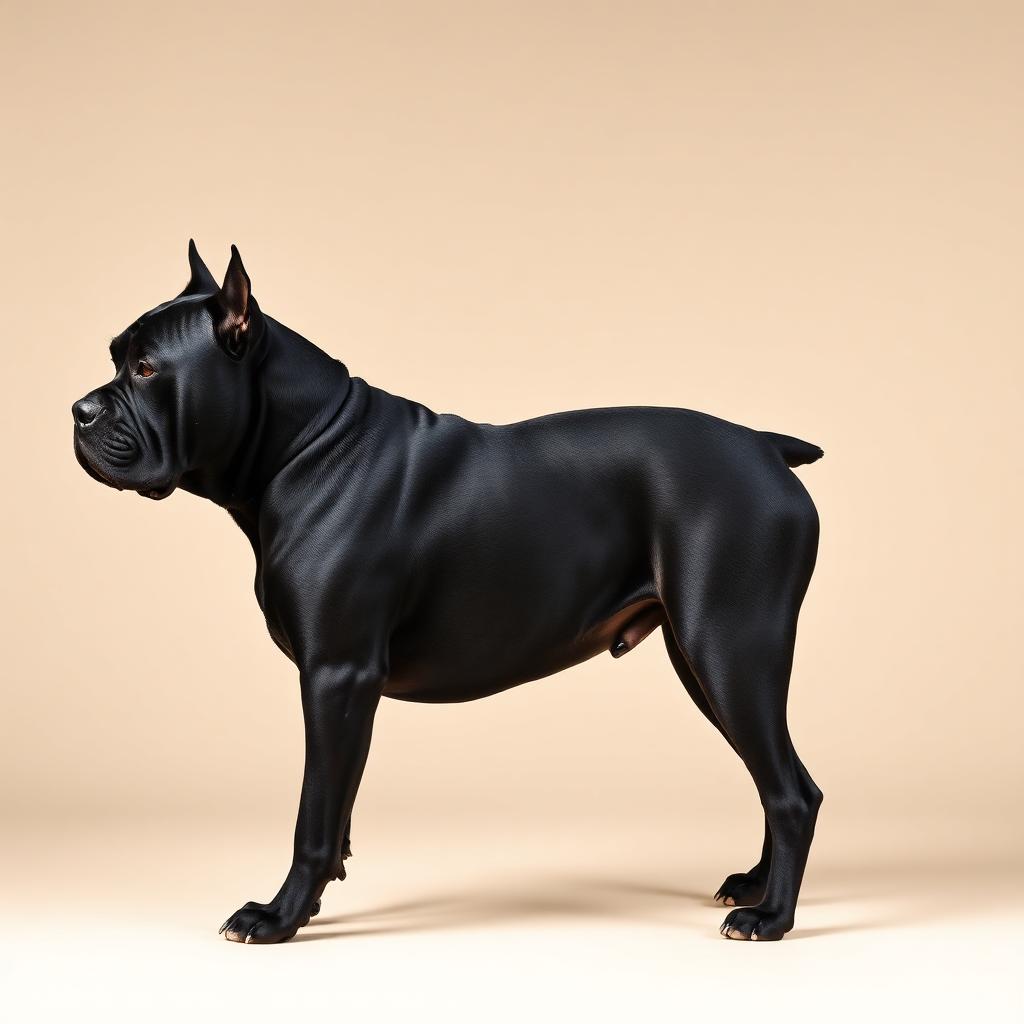
Cane Corso
"Ancient guardian: loyal, protective, and unshakable devotion."
Overview
The Cane Corso, an imposing Italian Mastiff, is a large dog breed known for its strong protective instinct and unwavering loyalty to its family. A direct descendant of ancient Roman war dogs (Canis Pugnax), the Cane Corso has evolved to become an exceptional guard dog and a faithful companion. Its balanced character, intelligence, and learning ability make it suitable for owners with experience in large and protective breeds who are willing to invest time in its early socialization and consistent training.
To ensure a well-adapted Cane Corso, firm and positive training from puppyhood is essential, as well as continuous exposure to various people, places, and situations. This will help channel its territorial nature appropriately. Regarding its care, this breed demands moderate but regular exercise (at least 60 minutes daily) to maintain its physical and mental health. A home with a secure yard is ideal, although it can adapt to an apartment if provided with sufficient exercise and stimulation. Its short coat is easy to maintain, requiring weekly brushing, but its diet must be high-quality and carefully managed to prevent problems such as gastric torsion and support healthy joint development.
In terms of health, the Cane Corso is prone to conditions such as hip and elbow dysplasia, and certain eye diseases. Therefore, it is crucial to acquire puppies from responsible breeders who perform relevant health screenings. With children, it can be a very affectionate and patient companion, but its large size always requires adult supervision to avoid accidents. Although maintenance costs are higher than for smaller breeds due to its food consumption and potential weight-based veterinary expenses, dedication to a Cane Corso is rewarded with a loyal, brave, and affectionate companion who will extraordinarily enrich family life and provide an unparalleled sense of security.

Key facts
- Size
- Large
- Weight
- 40–50 kg
- Life expectancy
- 10–12 years
- Daily exercise
- 75 min/day
- Estimated total
- 180€/month
- Country
- Italia / Italy
Character & temperament
The Cane Corso is a breed with a complex and deeply loyal personality. They are intelligent, balanced dogs with a great learning capacity, but their main characteristic is their protective instinct. They are extremely devoted to their family, whom they consider their pack, and will be willing to defend them without hesitation. This devotion translates into an exceptional guard dog: alert, watchful, and distrustful of strangers. However, a well-socialized and educated Cane Corso will not be aggressive without reason; it will simply observe and assess the situation. Within the home, they are surprisingly calm and serene for their size, enjoying the company of their loved ones. They are often described as "gentle giants" with their family, but this sweetness should not be mistaken for passivity. They need an owner with experience with large, protective breeds, someone who can establish their leadership firmly and fairly. Early and continuous socialization is fundamental to properly channel their protective instinct. Without proper socialization, they can become excessively shy or reactive. They are dogs that enjoy working and need mental as well as physical stimulation. A bored or undisciplined Cane Corso can develop destructive or undesirable behaviors. With proper handling, they are wonderful, protective companions with a comforting presence.
Living with children
The coexistence of a Cane Corso with children can be wonderful, but it requires constant supervision and proper training from puppyhood. They are dogs that, by nature, can be very protective of the youngest members of the family, considering them part of their "pack." However, due to their large size and strength, it is essential to teach them to interact gently and with control. Early socialization is crucial: exposing the Cane Corso puppy to children of different ages, under close supervision, will help it understand how to behave. It is vital to educate children on how to interact respectfully with the dog, avoiding pulling ears, tails, or interrupting while it eats or sleeps. A Cane Corso should never be left alone with small children unsupervised, as even unintentionally, an accidental bump with its heavy body could cause harm. With correct training and responsible owners, the Cane Corso can be a loyal and patient companion for children, participating in quiet games and offering a reassuring presence. They are dogs that enjoy family company and can form a very deep bond with the little ones, becoming their protective shadow. Their natural instinct is not aggression towards family children, but rather affectionate vigilance, but education is the key to harmonious and safe coexistence.
With other pets
The interaction of a Cane Corso with other pets requires a careful approach and very early, consistent socialization. Due to their strong prey drive and dominant nature, especially males, they may not be suitable for living with cats or other small animals if not raised with them since puppyhood. They can accept them as part of their family if gradually introduced and supervised. With other dogs, especially of the same sex, extensive socialization and firm human leadership are crucial; otherwise, dominance issues may arise. It is advisable that if another dog is to be introduced, it should be of the opposite sex and of similar or larger size.
Health & prevention
The Cane Corso is generally a robust breed, with a lifespan of 9 to 12 years, but like most large breeds, it is susceptible to certain health conditions. Hip and elbow dysplasia are primary concerns, making it essential to acquire puppies from breeders who perform health screenings on the parent dogs. Another significant condition is gastric dilatation-volvulus (bloat), a life-threatening medical emergency. To prevent it, it is recommended to feed the dog several small meals a day, avoid intense exercise before or after eating, and consider slow-feeder bowls. Eye diseases, such as entropion and ectropion (eyelids turning inward or outward, respectively), and progressive retinal atrophy, can also occur. Demodectic mange is another common condition in puppies or young dogs with weakened immune systems. It is crucial to keep up with vaccinations, deworming, and regular veterinary check-ups. Proper weight control and a balanced diet are fundamental for the joint and overall health of this breed. Early detection and proactive management of any signs of illness can significantly improve the quality of life and longevity of the Cane Corso.
Health risks
- •Hip dysplasia
- •Entropion
- •Gastric torsion
Care
Nutrition
Nutrition is a fundamental pillar for the optimal health and development of the Cane Corso, especially during their growth stage. As a giant breed, they require a high-quality diet with a precise balance of proteins, fats, vitamins, and minerals. It is crucial to choose a feed specifically formulated for large or giant breeds, which contains controlled levels of calcium and phosphorus to support slow and gradual bone growth, thus preventing joint problems like dysplasia. Cane Corso puppies should not grow too rapidly. Two or three meals a day are recommended for adult dogs and three or four for puppies, always avoiding feeding in a single large meal to reduce the risk of gastric torsion. After eating, it is important for the dog to rest and not engage in intense physical activity. Consulting a veterinarian or canine nutritionist to establish the most suitable diet according to the age, activity level, and health status of each Cane Corso is essential to ensure long-term well-being.
Grooming & hygiene
The Cane Corso has a short, dense, and easy-to-maintain coat, which makes grooming straightforward. Weekly brushing with a rubber glove or a curry comb is usually sufficient to remove loose hair, stimulate circulation, and distribute natural skin oils, keeping the coat shiny and healthy. During shedding seasons, which typically occur twice a year, brushing should be more frequent (2-3 times a week) to help manage hair shedding. Baths should be occasional, only when strictly necessary, using a mild shampoo specific for dogs to avoid drying out their skin. It is essential to pay attention to dental hygiene, with regular brushing to prevent tartar buildup and periodontal diseases. Nails should be trimmed regularly to prevent them from growing too long and causing discomfort or problems when walking; this can be done every 2-4 weeks. Finally, ears should be checked weekly and cleaned if necessary to prevent infections, especially if the dog spends a lot of time outdoors or in humid environments.
Exercise & training
Exercise plan
Despite their size, the Cane Corso is not a dog that requires exhaustive and strenuous exercise. However, they do need **moderate and regular physical activity** to stay healthy, balanced, and prevent boredom and obesity. I would recommend at least **60 minutes of daily exercise**, which can be distributed over two long walks or play sessions. Walks should be brisk and on a leash, taking advantage of controlled socialization with other dogs and people. They enjoy activities such as tracking, search games, or carrying a doggy backpack to make them feel like they have a “job.” Intense and high-impact activities, such as excessive jumping or abrupt running, should be avoided in puppies and young dogs to protect their developing joints. In addition to physical activity, **mental stimulation** is crucial for this intelligent breed. Puzzle toys, obedience training, or agility classes (adapted to their size) can satisfy their need for purpose and keep their minds active. A Cane Corso without enough physical and mental exercise can become destructive or develop anxiety.
Training
The Cane Corso is an intelligent and willing-to-learn breed, but their training requires **firmness, consistency, and confident leadership**. This is not a breed for first-time or indecisive owners. **Basic obedience training** should start at a very early age (8-10 weeks) with puppy socialization classes. It is crucial to establish clear rules and boundaries from the beginning. A Cane Corso needs an owner who is the "pack leader" in a calm and authoritative way, never resorting to physical punishment. Use **positive reinforcement** (rewards, praise) to motivate them, as they respond very well to this method. Given their protective nature, **continuous socialization** is as important as training. They must be exposed to a wide variety of people, places, sounds, and situations in a positive way so they learn to discern between a real threat and a normal situation. Training should be a constant part of their life to keep their minds active and their behavior under control. Without proper training and socialization, a Cane Corso can become overly protective, dominant, or timid, which, given their size and strength, can be problematic.
Monthly cost
The sheer volume of food consumed and the price of medications/parasite control (calculated by weight) significantly increase monthly expenses.
Estimate for Spain, healthy adult dog. Varies by region and provider.
Pros & cons
Pros
- ✓Extremely loyal and protective of its family.
- ✓Intelligent and highly trainable.
- ✓Excellent guard dog, very deterrent due to its presence.
- ✓Surprisingly calm and affectionate within the home with its family.
- ✓Easy to groom, requires low coat maintenance.
Cons
- !Requires early and consistent socialization for a balanced temperament.
- !Needs an experienced owner and a firm leader.
- !Potentially dominant with other dogs, especially of the same sex.
- !Due to its size and strength, can be dangerous if not well-trained.
- !Susceptible to hip/elbow dysplasia and bloat.
Ideal for
- • Active families with experience in large and protective breeds.
- • Homes seeking a loyal guard dog and protector.
- • Owners willing to invest time in consistent socialization and training.
- • Rural environments or houses with a large, secure yard.
Not recommended for
- • First-time or indecisive owners without experience with large dogs.
- • Homes with a sedentary lifestyle or no time for daily exercise.
- • Families unable to provide intensive socialization and training.
- • People living in small apartments without access to open spaces.
How it fits each scenario
Not an ideal breed for an apartment. Their size and need for space make them more comfortable in houses with a yard. However, if daily exercise is rigorous, they could adapt, though it's not optimal.
Ideal for a house with a well-fenced and secure garden. A yard provides them with the necessary space to move, patrol, and play, although daily exercise outside the home is equally essential.
They can tolerate hot climates, but it's crucial to provide them with shade, plenty of fresh water, and limit exercise during the hottest hours to prevent overheating, especially if they have dark coats.
With their short coat and muscular density, they can feel cold. In very cold climates, they will need an extra coat for going outside and a warm, protected indoor space for resting and sleeping.
Requires maximum caution and constant supervision. Their large size could lead to accidental bumps. It's vital to teach both the dog and children to interact respectfully and never leave them alone.
With proper socialization and training, the Cane Corso can be a loyal and protective companion for school-aged children. Supervision remains key, and teaching children to respect them is fundamental.
Not recommended for first-time owners. They need an experienced, firm, and consistent leader who understands the needs of a working breed with a strong protective instinct.
Excellent choice for owners experienced with large or working breeds. They will appreciate their intelligence, loyalty, and protective ability, and will know how to guide and socialize them correctly.
Adapts well to active families who can offer daily walks, controlled games, and mental stimulation. They love being part of family activities, as long as they are suitable for their pace.
A very busy family is not suitable for a Cane Corso. They need a lot of family interaction, exercise, and training. Lack of attention can lead to behavioral problems and anxiety.
Not a hypoallergenic dog. Although they shed less than other breeds for much of the year, they have a significant shedding period and are not a good choice for people with allergies.
Not suitable for a low budget. Their size implies higher costs for food, veterinary care (medication by weight), accessories, and insurance. It is a significant financial investment.
Origin & history
Descended from the formidable Roman war dogs (Canis Pugnax). Bred in the rural areas of southern Italy, they performed multiple tasks such as farm guarding, wild boar hunting, and livestock protection.
The Cane Corso, meaning 'guardian dog' or 'bodyguard dog' in Latin, was used not only as a war dog but also as a cattle herder and wild boar hunter, demonstrating its versatility and strength throughout Roman and rural Italian history.
Frequently asked questions
Is the Cane Corso naturally aggressive?▾
No, the Cane Corso is not inherently aggressive. They are dogs with a strong protective and territorial instinct, meaning they are wary of strangers and will defend their family if they perceive a threat. However, a well-socialized and properly trained Cane Corso will be balanced, calm, and will only exhibit aggression if provoked or threatened, or if their family is in danger. The key lies in early socialization and consistent training to ensure their protective instinct is properly channeled and does not turn into uncontrolled aggression or fear.
How much exercise does a Cane Corso need daily?▾
An adult Cane Corso needs at least 60 minutes of moderate exercise daily. This can include two long, brisk walks, playtime in a fenced yard, or activities that stimulate their mind, such as obedience exercises or fetch. Puppies require less intense but more frequent exercise, avoiding jumps or strenuous efforts that could harm their developing joints. It's crucial to combine physical activity with mental stimulation to keep them balanced and prevent boredom, which can lead to destructive behaviors.
Can I have a Cane Corso if I have small children?▾
Yes, but with extreme caution and constant supervision. A well-socialized Cane Corso can be very patient and protective with family children. However, their large size and strength mean that even an accidental movement or rough play could cause harm to a small child. It is fundamental to teach both the dog and children how to interact safely and respectfully, and never leave minors unsupervised with a dog of this breed. Socialization with children from puppyhood is indispensable for safe coexistence.
What health problems are common in Cane Corsos?▾
Cane Corsos, like many large breeds, are prone to certain health conditions. The most common include hip and elbow dysplasia, making it vital to choose a responsible breeder who performs genetic tests on the parent dogs. They are also susceptible to gastric torsion (bloat), a serious medical emergency, so it is recommended to feed them in several small meals and avoid exercise after eating. Other problems can include eye diseases such as entropion/ectropion and demodectic mange. Regular veterinary check-ups and a proper diet are key for prevention and early detection.
How much does it cost to keep a Cane Corso per month in euros?▾
The monthly cost of keeping a Cane Corso can be around 180 euros, making it one of the more expensive breeds. Most of this budget goes to food, as they need large quantities of high-quality kibble. Veterinary expenses can also be high, especially for medications and treatments whose price is often calculated by weight. Additionally, costs for accessories (large beds, strong leashes), toys, hygiene, and optionally, pet health insurance, should be considered. It is a considerable financial investment that must be taken into account.
Are Cane Corsos hypoallergenic?▾
No, the Cane Corso is not a hypoallergenic breed. Although they have a short coat and shed a moderate amount of hair most of the year, they go through seasonal shedding periods where hair loss is more significant. Dog allergies are usually caused by dander, saliva, or urine, not just hair. Therefore, a Cane Corso is not recommended for people with severe dog allergies, as they could trigger adverse reactions.
How much training does a Cane Corso need to be a well-behaved dog?▾
The Cane Corso requires a commitment to continuous, lifelong training to be a balanced and well-behaved dog. Basic obedience training should start very early, between 8 and 10 weeks of age, and continue with socialization classes. They are intelligent dogs that learn quickly but need a firm and consistent leader who uses positive reinforcement methods. A few classes are not enough; training must be an integral part of their daily routine to keep them mentally stimulated and to cement their good behavior and obedience to their owner's wishes.
Can a Cane Corso travel well in a car or on transport?▾
Yes, a Cane Corso that is well-socialized and accustomed to travel from puppyhood can adapt well to car trips. It is fundamental to gradually accustom them to the vehicle, associating it with positive experiences, and to use large, secure crates or safety harnesses specific for large breeds. Due to their size, long journeys may require frequent stops for stretching and potty breaks. For public transport or air travel, regulations vary, and their large size often means traveling in the cargo section, which requires meticulous planning and preparation.
Similar family-friendly breeds

Rottweiler
6.4Strong, loyal and territorial. Restricted breed in Spain: requires licence, insurance and expert handling.

Bullmastiff
6.8Massive, calm-at-home guardian. Affectionate with family, wary with strangers.

Golden Retriever
9.8The quintessential family companion: patient, sociable, and always up for play. Excellent with children and easy to train.