Chow Chow
"Majestic, loyal, and aloof: a guardian with a lion's soul."
Overview
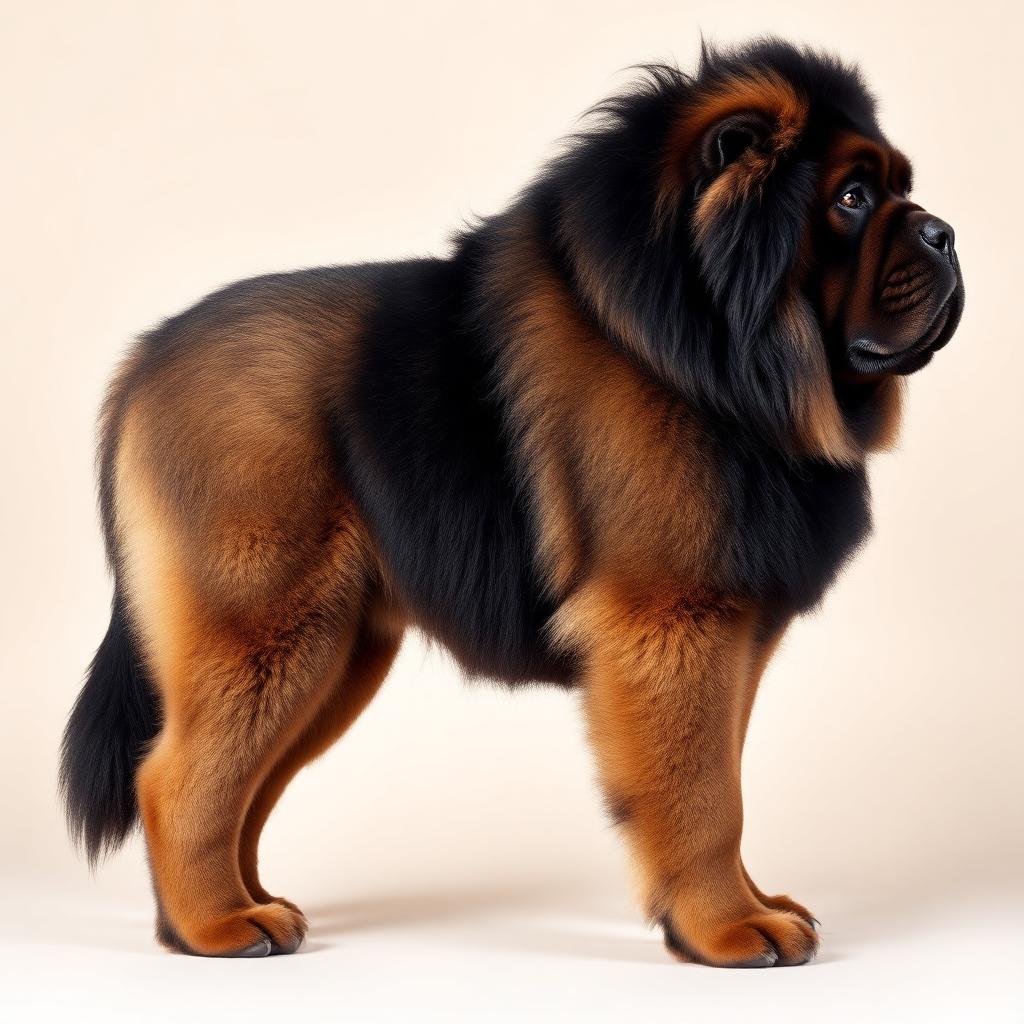
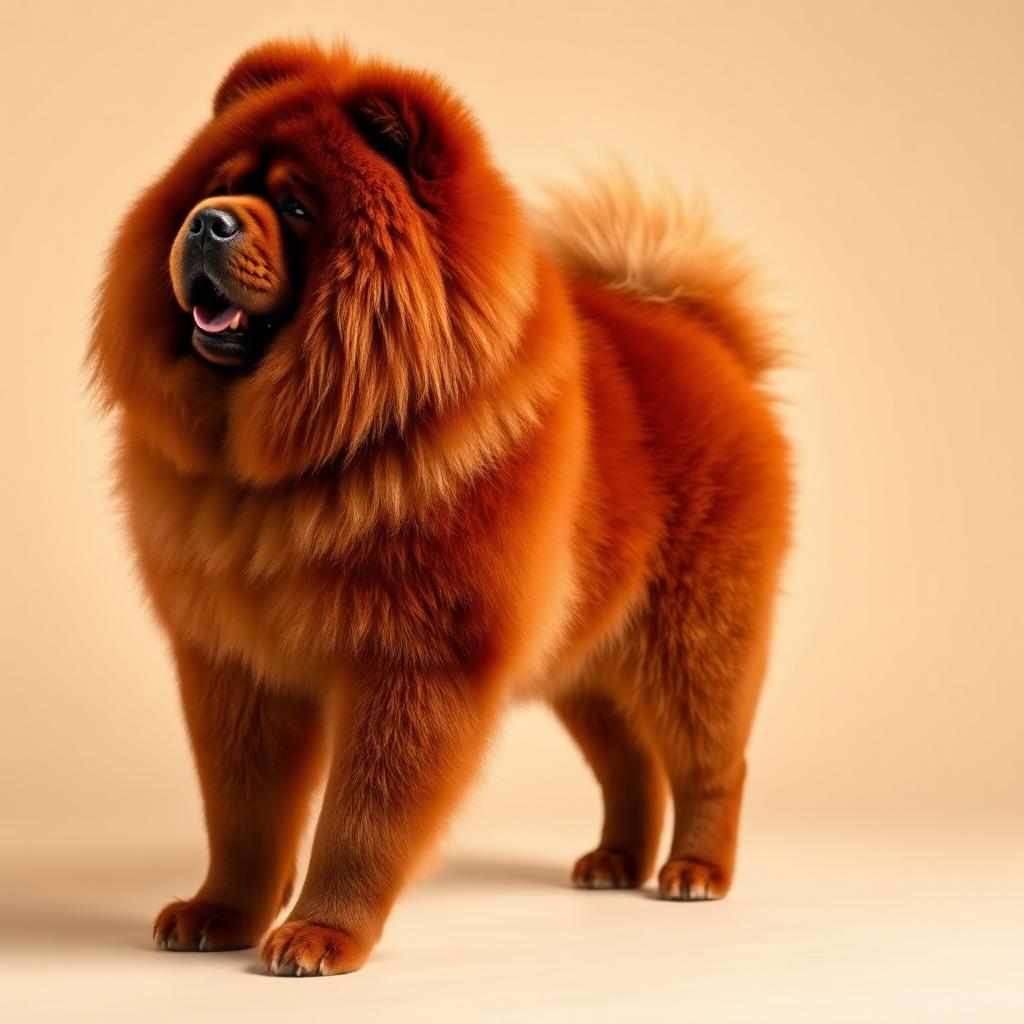
The Chow Chow is a majestic and ancient dog breed originating from China, known for its lion-like appearance, distinctive blue-black tongue, and independent temperament. If you are considering adding a Chow Chow to your family, it is crucial to understand its unique characteristics and needs. These medium to large-sized dogs are exceptionally loyal and protective of their immediate family, making them excellent guard dogs. However, their guarding instinct and natural distrust of strangers require early and consistent socialization to ensure they are well-adjusted dogs in society. Their character is often described as feline, preferring dignified and calm companionship over constant effusiveness.
Regarding their care, the Chow Chow's dense and abundant coat demands regular brushing and often the help of a professional groomer to prevent tangles and keep their skin healthy. Their majestic coat, while beautiful, also makes them susceptible to heat, so they require special precautions in warm climates and during exercise. Speaking of exercise, Chow Chows have moderate needs; a couple of calm daily walks are usually sufficient. They are not a dog for high-intensity activities, which makes them suitable for owners with a calmer lifestyle.
The training of a Chow Chow can be challenging for first-time owners due to its stubborn and independent nature. They respond best to positive reinforcement and a confident, consistent leader. Coexistence with children must be supervised, especially if they are young, as they are not as tolerant of rough play. Pets in the home, particularly other same-sex dogs or small animals, can also be an issue due to their territoriality and strong prey drive. In terms of health, they are predisposed to certain conditions such as hip and elbow dysplasia, entropion, and thyroid problems. It is essential to choose an ethical breeder who performs genetic testing. Investing in quality food and regular veterinary visits is key to the Chow Chow's well-being. If you are looking for a loyal and dignified companion and are willing to commit to its socialization, training, and specialized care, the Chow Chow can be a rewarding addition to your life.
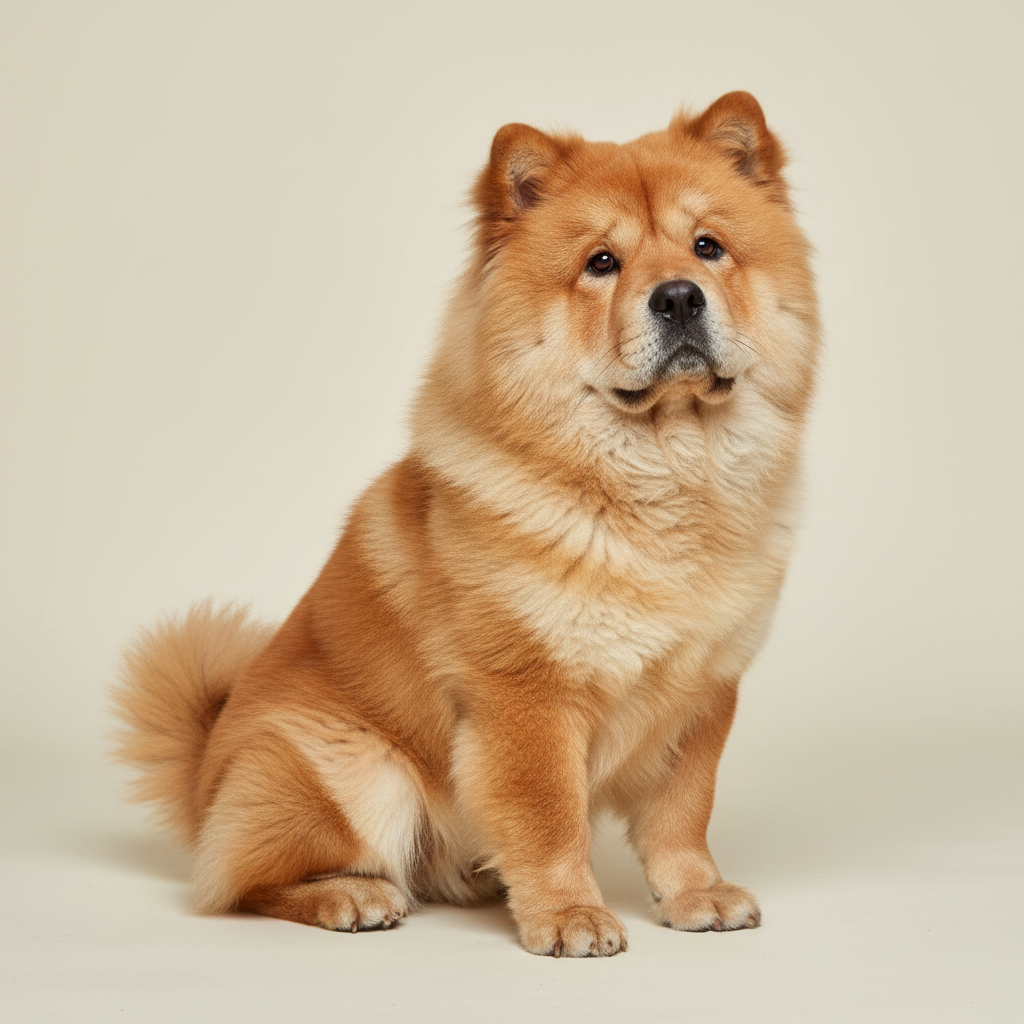
Key facts
- Size
- Medium
- Weight
- 20–32 kg
- Life expectancy
- 8–12 years
- Daily exercise
- 45 min/day
- Estimated total
- 240€/month
- Country
- China
Character & temperament
The Chow Chow is renowned for its distinctive personality, often described as dignified, aloof, and somewhat feline. It is not an effusive dog that constantly seeks attention or affection, preferring instead to maintain a more reserved and independent relationship with its owners. Despite this apparent aloofness, it is extremely loyal and protective of its family, whom it considers its primary pack. Its loyalty is unwavering, but it is earned with respect and consistency. It tends to form a very strong bond with one or two people in the household, showing them special devotion. With strangers, the Chow Chow is naturally wary and reserved; it is not usually aggressive but will not seek contact either. Early and prolonged socialization is crucial to help it accept new people and situations without fear or excessive anxiety, though it will always maintain its vigilant stance. Its guarding instinct is highly developed, making it an excellent protective dog, alerting to any unusual presence. It is not a dog prone to endless games or blind obedience; it has a mind of its own and can be stubborn, so training must be patient, firm, and always based on positive reinforcement. Understanding and respecting its independent nature is key to harmonious coexistence. It is a dog that values tranquility and is not comfortable in noisy or chaotic environments, making it suitable for homes that can offer it a serene setting. Its intelligence is undeniable, but its self-will means it will learn what it deems useful or interesting. Its teddy bear appearance contrasts with its strong and sometimes brusque character, requiring potential owners to be well-informed about the breed's uniqueness.
Living with children
The coexistence of a Chow Chow with children is a matter that requires careful consideration and constant supervision, especially if the children are young. Due to its reserved and independent nature, the Chow Chow is not the most patient or tolerant dog with noisy games or rough handling that children sometimes exert. Although loyal to its family, its affection is not manifested in the same way as in more extroverted breeds. It is not a dog that actively seeks to play with children or that will tolerate ear or tail pulling without reacting. However, with early and adequate socialization and firm education for both (dog and children), a respectful coexistence can be achieved. Children must be taught to interact with the Chow Chow in a calm and respectful manner, understanding its limits and learning to recognize signals that the dog needs space. It is essential for parents to always supervise interactions to prevent any incidents. A Chow Chow should never be left alone with young children unsupervised. For a household with older, mature children who can follow rules and respect the dog, a well-socialized Chow Chow can be a quiet and protective companion. It is not the ideal dog for a house with small children who do not know how to interact with a dog or who may be very energetic and unpredictable. Its guarding nature can also lead it to try to excessively "herd" or protect children. The key is patience, education, and constant supervision to ensure that both the dog and the children feel safe and respected in the home.
With other pets
The **Chow Chow** is not usually an ideal companion for living with other pets, especially other dogs of the same sex or small animals, due to its **strong predatory instinct and territoriality**. Its dominant nature and independence can clash with the presence of other dogs, often leading to conflicts. If raised from a puppy alongside another pet, and with extremely early and consistent socialization, it might tolerate living with an opposite-sex dog, though it won't necessarily form a close bond. With cats or other small pets, its hunting instinct is a considerable risk factor, so coexistence is usually unfeasible or requires exhaustive and constant supervision. If considering adding another pet to a home with a Chow Chow, or vice versa, it is essential to seek advice from a canine behavior professional.
Health & prevention
While generally robust dogs, Chow Chows can be susceptible to certain genetic health conditions or those related to their specific morphology. Hip and elbow dysplasia is a common concern in many large breeds, and the Chow Chow is no exception. It is crucial for breeders to health test the parent dogs to minimize the risk. Another frequent eye condition is entropion, where the eyelid folds inward, irritating the eye with the eyelashes and requiring surgery to correct. They can also suffer from ectropion, the opposite condition. Given their somewhat flat face (brachycephalic, though less so than some other breeds), they can be prone to respiratory problems and heatstroke, especially in warm climates or during intense exercise. Their dense coat also contributes to this. Skin allergies are relatively common, manifesting as irritation, itching, or infections. Thyroid disease (hypothyroidism) is another condition they may be predisposed to. Finally, patellar luxation and some heart problems can occur. Regular veterinary check-ups, a balanced diet, and proper control of exercise and ambient temperature are essential to keep a Chow Chow healthy. Responsible breeders will always provide health certificates for the parents.
Health risks
- •Hip dysplasia
- •Entropion
- •Hypothyroidism
Care
Nutrition
The **Chow Chow's nutrition** must be carefully managed to maintain its optimal health and its characteristic coat in good condition. Given their propensity for hip and elbow dysplasia, a high-quality kibble formulated for large or medium breeds with **adequate calcium and phosphorus control** is essential during their growth phase. For adults, a food with a balance of **good quality proteins**, healthy fats (such as omega-3 and omega-6 for skin and coat), and complex carbohydrates is ideal. Overfeeding should be avoided, as they are prone to being overweight, which exacerbates joint problems. It is advisable to divide the daily ration into two meals to aid digestion. Some Chow Chows may develop food sensitivities, so a hypoallergenic or limited-ingredient diet might be beneficial. Always ensure they have constant access to fresh water. Consult with your veterinarian to establish a specific nutritional plan that considers their age, activity level, and health status.
Grooming & hygiene
The **Chow Chow** possesses a dense and abundant coat that requires **meticulous care and maintenance** to prevent mats, tangles, and skin problems. There are two coat varieties: rough (more common and with a dense undercoat) and smooth. Both require regular brushing, preferably **2-3 times a week**, using a pin brush and a rake to remove dead undercoat hair. During shedding seasons (usually twice a year), brushing should be daily. Baths should be spaced out, every 1-2 months, using a specific dog shampoo. It is crucial to thoroughly dry the dog after bathing to prevent the proliferation of fungi or bacteria under the dense coat. Special attention should be paid to facial wrinkles and around the mouth to keep them clean and dry. **Dental care** with regular brushing and periodic veterinary check-ups are important. Nails should be trimmed every 3-4 weeks to prevent discomfort and walking problems. Accustoming the puppy to the grooming routine from a young age will facilitate the task throughout its life. Proper grooming not only maintains its majestic appearance but also contributes significantly to its overall health and well-being.
Exercise & training
Exercise plan
Despite their sturdy build, the **Chow Chow** is not a breed that requires an excessive amount of exercise. They are dogs of moderate energy and prefer quiet walks over intense and prolonged sessions. **Two daily walks of 20-30 minutes** are usually sufficient to meet their physical and mental needs. It is important to consider their dense coat, which makes them **prone to overheating** in warm climates. Therefore, in summer or hot days, walks should be carried out early in the morning or late in the evening, avoiding the middle of the day when the sun is strongest. They are not dogs for running or strenuous hiking, and they do not enjoy high-intensity canine sports. A secure garden where they can explore calmly is a plus, but it is not an indispensable requirement if their walks are regular. Mental stimulation through scent games or interactive toys is also beneficial. Excessive exercise can be detrimental to their joints, especially in puppies, and can lead to heatstroke. A balance between moderate physical activity and rest time is key to their well-being.
Training
The **Chow Chow's training** is a rewarding challenge that requires patience, consistency, and a deep understanding of its independent and stubborn character. They do not respond well to harsh or coercive training methods; **positive reinforcement** is the key to their success. Start **socialization and obedience training from an early age** (8-12 weeks) to expose them to a variety of sounds, people, places, and other dogs in a positive and controlled manner. This is crucial to mitigate their natural distrust of strangers. Training sessions should be short, fun, and varied to keep their interest, as they get bored easily. Establish clear rules and always be consistent; any inconsistency will be exploited by this intelligent breed. The Chow Chow tends to respect a calm and confident leader. Teach basic commands like 'sit', 'stay', and, crucially, a good recall ('come') and to 'stay' on leash, given their tendency towards dominance. Consider puppy classes and basic obedience training for professional guidance and to reinforce socialization. Never expect German Shepherd-like obedience from a Chow Chow; their independent nature means they will often cooperate if they see a point or benefit in it. The key is to build a relationship of mutual respect and trust.
Monthly cost
Grooming costs are higher than average due to the density of their coat.
Estimate for Spain, healthy adult dog. Varies by region and provider.
Pros & cons
Pros
- ✓Extremely loyal and protective of its family.
- ✓Relatively quiet and not prone to excessive barking.
- ✓Excellent guard dog, with a natural protective instinct.
- ✓Moderate exercise needs, suitable for calm lifestyles.
- ✓Majestic and unique appearance, with an imposing presence.
Cons
- !Can be stubborn and independent, difficult to train for novices.
- !Requires extensive and early socialization with people and other animals.
- !Not tolerant of rough handling, not ideal for very young children.
- !Possesses a prey drive and territoriality that complicates coexistence with other pets.
- !Prone to overheating and has high grooming needs.
Ideal for
- • Experienced owners seeking a loyal and independent dog.
- • Individuals who can dedicate time to socialization and training.
- • Families with older children who respect the dog's boundaries.
- • Households that value calm and dignified companionship.
Not recommended for
- • First-time owners or those inexperienced with independent dogs.
- • Families with very young children or a chaotic lifestyle.
- • Households with multiple pets (especially same-sex or small ones).
- • People seeking an effusive and constantly eager-to-please dog.
How it fits each scenario
A Chow Chow can adapt to apartment living if it receives sufficient moderate exercise and mental stimulation. Their energy level is not extremely high, and once at home, they tend to be quiet.
A home with a secure garden will provide the Chow Chow with additional space to explore calmly and observe its surroundings, satisfying its guardian instinct. Ensure the garden is well-fenced.
Not the ideal breed for hot climates due to its dense coat. Requires extreme precautions to prevent heatstroke: walks during cool hours, constant access to water and shade, and air conditioning.
The Chow Chow tolerates cold climates very well thanks to its double, dense coat, which provides natural insulation. It will enjoy winter walks and even snow.
Not recommended due to its independent nature and low tolerance for rough handling. Requires constant supervision and is preferred with older children who understand how to interact with a dog.
Can adapt well with school-aged children who are respectful and have been taught how to interact properly with a dog. Adult supervision is always essential.
Not the best choice for first-time owners due to its stubborn and independent nature, which requires experience and consistent, firm training from the start.
An experienced owner will understand its unique temperament and know how to apply consistent socialization and training, valuing its loyalty and more reserved character.
Not the dog for extremely active families looking for a companion for running or intense sports. It prefers calm walks and relaxed quality time at home.
Although independent, it needs attention and companionship. A very busy family that cannot dedicate time to its socialization, training, and grooming is not ideal for this breed.
The Chow Chow is not a hypoallergenic breed. It sheds a considerable amount of hair, especially during seasonal molts, making it unsuitable for people with allergies.
Due to its professional grooming needs, quality food, and potential veterinary costs for its predisposition to certain diseases, it is not a suitable breed for a low budget.
Origin & history
Originating from the northern steppes of China, the Chow Chow has served for millennia as a hunting dog, guardian of temples and properties, and as a sled-puller. Evidence of its existence dates back to the 3rd century BC, making it one of the oldest and most genetically pure breeds in the world. It is believed to be related to the Nordic Spitz and the Tibetan Mastiff, having significantly influenced the development of other Asian breeds. Its evolution in geographical isolation in China contributed to the preservation of its distinctive traits and unique temperament.
The Chow Chow's blue-black tongue is such a unique characteristic that it was believed to have come from licking up pieces of the sky when the world was created.
Frequently asked questions
Is the Chow Chow a noisy dog or prone to barking a lot?▾
Generally, the Chow Chow is not a noisy breed. They are not known for excessive barking unless there is a good reason, such as the presence of a stranger near their territory or an alarm. Their vigilant nature makes them alert, but they usually do so with a deep, measured bark, not hysterically. In a calm environment, they are quite quiet dogs. However, their guarding instinct can make them bark more if they have not been properly socialized or if they feel their family or space is threatened. The key is obedience training from puppyhood to control this barking.
Can I leave my Chow Chow alone at home for hours?▾
The Chow Chow is an independent breed and, compared to other dogs, may tolerate being alone better. However, like any dog, it should not be left alone for excessively long periods regularly. They can get bored or develop separation anxiety, though it's not as common as in more attached breeds. It's crucial that it has had enough exercise and mental stimulation before being left alone. Limiting it to 4-6 hours a day is ideal, no more. Leaving interactive or enrichment toys can help. Gradual training to accustom it to solitude from a puppy is essential.
What is the Chow Chow's personality like with young children?▾
The Chow Chow's interaction with young children requires great caution. It is not a naturally patient or tolerant dog with noisy play, pulling, or invasion of its personal space, which is common in small children. Its reserved nature and jealousy of its dignity mean it can react if it feels uncomfortable or threatened. While they can be protective of the children in their family, they are not playful in the same way as other breeds. It is vital to always supervise interactions and teach both the dog and children the limits of respect and space. Ideally, it is recommended for families with older, respectful children.
Does the Chow Chow need professional grooming or can I do it myself?▾
Due to the density and particularity of its coat, regular professional grooming is highly recommended, at least every 2-3 months. A professional dog groomer specializing in double-coated breeds will know how to manage it to prevent mats, maintain a healthy undercoat, and minimize shedding. While daily or several-times-a-week brushing at home is essential, a professional can perform deep deshedding and a hygiene trim that keeps its skin and coat in optimal condition, especially during shedding seasons. Attempting a full groom at home without experience can damage its coat.
What is the average lifespan of a Chow Chow and what are its main health problems?▾
The average lifespan of a Chow Chow ranges from 9 to 12 years, though some can live longer with good care. Regarding health problems, they are prone to hip and elbow dysplasia, entropion (inward-folding eyelids) and ectropion (outward-folding eyelids), as well as thyroid problems (hypothyroidism). Their dense coat and physiognomy can make them susceptible to heatstroke in warm climates and respiratory difficulties. Skin allergies are also relatively common. Choosing a responsible breeder who performs health tests on parent dogs can significantly reduce the risk of these conditions.
Do Chow Chows accept car travel well?▾
A Chow Chow's acceptance of car travel varies from individual to individual, but with early socialization and positive experiences, many can come to tolerate it. It's crucial to accustom the puppy from a young age to short trips, using a secure crate or a specific dog seat belt in the back seat. Avoid long trips initially or if the dog shows signs of stress. Some Chow Chows may suffer from motion sickness, for which your veterinarian might recommend solutions. Offer frequent breaks and ensure the car is well-ventilated and cool, especially due to their heat sensitivity.
How can I prevent my Chow Chow from being aggressive towards strangers?▾
The key to preventing aggression in a Chow Chow towards strangers is extremely early, continuous, and positive socialization. From puppyhood, expose it to a wide variety of people of all ages and appearances, always in a controlled environment and with pleasant experiences (treats, gentle petting). Teach it that new people are a source of good things, not a threat. Firm and consistent training that establishes your leadership is also essential. Never reinforce its fear or distrust. If you notice signs of aggression, seek the help of a professional ethologist or dog trainer immediately to correct the behavior at its root.
Is it true that the Chow Chow has a blue tongue?▾
Yes, it is entirely true and is one of the most distinctive and fascinating characteristics of the Chow Chow. They have a blue-black or 'plum-colored' tongue, as well as the mouth in general. This pigmentation is unique in the canine kingdom, shared only with the Shar Pei (and very rarely in other breeds). The coloring should be uniform in adults; although puppies are born with pink tongues, it gradually darkens in the first few weeks of life. If it doesn't, it's not considered a purebred Chow Chow according to standards, but it doesn't affect its health.