
Poodle
"A brilliant mind in a curly coat: the Einstein of family dogs."
Overview
The Poodle is an exceptionally intelligent breed available in three distinct sizes. Often described as the genius of the dog world, they learn boundaries quickly, making training remarkably easy for first-time owners who use positive reinforcement. However, their sharp minds demand daily engagement; without mental challenges, they will easily become bored and might invent destructive games in the home.
Despite their elegant appearance, they are robust athletes needing around 60 minutes of daily exercise. They are highly adaptable and will happily settle in a small city apartment or a large suburban house with a garden, provided their physical needs are met. With a moderate tolerance to hot and cold weather, they enjoy participating in family outings all year round, as long as temperature extremes are avoided.
Their incredibly patient nature ensures excellent behaviour with children, making them fantastic playmates. For families with energetic toddlers, the robust Standard size is the safest option. The fragile Miniature and Toy variations are just as affectionate but can be easily injured during rough play. Regardless of size, they are classic velcro dogs that demand to be deeply involved in family activities, rather than left alone outdoors.
A major draw for many parents is having a hypoallergenic dog that barely sheds. Yet, those famous curls come with a significant downside: a high monthly maintenance cost. Families must budget around 210 euros for lifelong, regular professional grooming to prevent painful matting. If you are prepared for that financial commitment, this loyal and funny companion will enrich your household for up to fifteen years.

Key facts
- Size
- Medium
- Weight
- 4–32 kg
- Life expectancy
- 12–15 years
- Daily exercise
- 60 min/day
- Estimated total
- 210€/month
- Country
- Germany / France
Character & temperament
The Poodle's temperament is a mix of high-intelligence, dignity, and a goofy sense of humor. They are 'people dogs' who thrive on being part of the family action rather than being left in a yard. Unlike some breeds that are stubborn, Poodles are eager to please and will often anticipate their owner's next move. They are remarkably sensitive to the tone of voice, so positive reinforcement is the only way to go.
With strangers, they are typically polite but somewhat reserved. They aren't usually aggressive, but they won't shower every visitor with affection immediately. They prefer to observe and assess before deciding to become friends. This makes them excellent watchdogs, as they are alert to changes in their environment and will bark to notify their family of anything unusual without being nuisance barkers if properly trained.
For their owners, Poodles are intensely loyal and affectionate. They often develop a 'velcro' personality, following you from room to room just to see what you are doing. Because they are so smart, they can become manipulative if they sense a weakness in leadership. They need an owner who provides clear boundaries and plenty of mental stimulation; otherwise, they might 'invent' their own games, which usually involves chewing your favorite shoes.
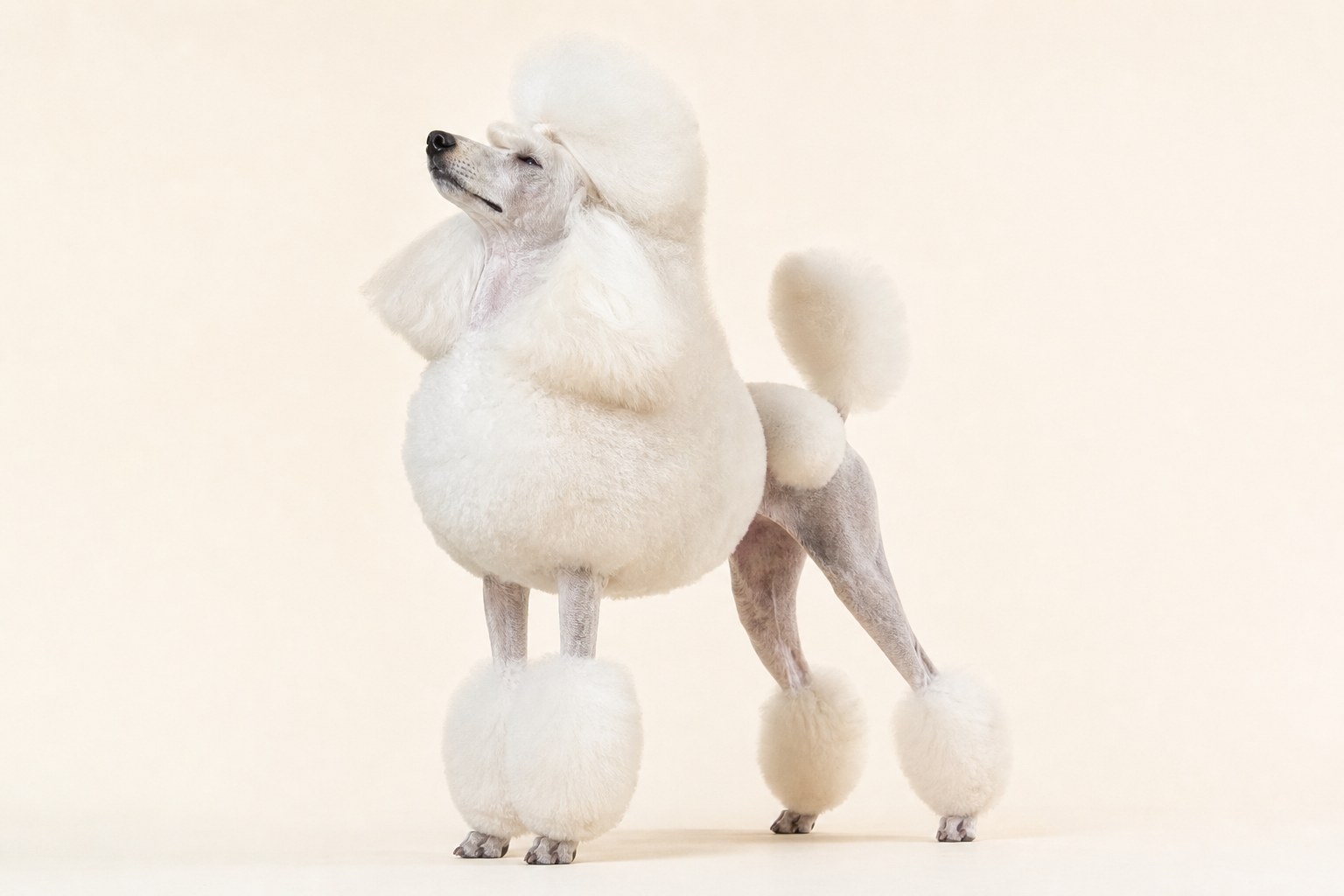
Their signature trait
Living with children
The Poodle is a stellar family dog across all categories, but size matters when it comes to children. Standard Poodles are robust enough for energetic toddlers and school-aged kids; they are patient, gentle, and rarely snappy. Their playful nature makes them perfect for children who want a dog that can actually play fetch or run through obstacle courses. They tend to be protective but in a balanced way, often acting as a watchful 'nanny' during backyard play.
Miniatures and Toys require more caution. While their temperament is just as loving, their physical fragility means they are easily injured by well-meaning but clumsy toddlers. For families with children under 6, a Standard or a sturdy Miniature is usually the safer choice. For teenagers, any Poodle size is excellent, as they are smart enough to participate in training hobbies and sensitive enough to provide emotional support during the challenging high school years. Overall, they are one of the most reliable breeds around children.
With other pets
Poodles are generally social and get along well with other household pets. They lack the intense prey drive of terriers or the aggression of some guard breeds. When introduced properly, they coexist peacefully with cats and often become close companions. With other dogs, they are usually playful and non-confrontational, though some smaller Poodles may feel the need to 'boss around' larger dogs. Their history as hunting dogs means they might chase a bird or a hamster if given the chance, so supervised introductions with small prey animals are always a must.
Health & prevention
Poodles are generally sturdy, but they face specific genetic hurdles. Standard Poodles are prone to Gastric Torsion (bloat), a life-threatening emergency, so using slow-feeders is wise. Across all sizes, Progressive Retinal Atrophy (PRA) can lead to blindness, so ensure parents have clear eye certificates. Addison’s Disease is an endocrine disorder often seen in the breed; it’s manageable with medication but requires lifelong care. Periodic vet checks should focus on thyroid function and dental health, as smaller varieties are prone to tartar buildup.
Prevention is key: keeping them lean and checking their long ears weekly for redness or odor will prevent the most common chronic issues like otitis. Expect a healthy Poodle to stay active well into its teens with proper nutrition and regular cardiovascular exercise. Always ask breeders for hip and elbow scores for the larger varieties to avoid early-onset arthritis.
Health risks
- •Ear infections
- •Eye problems
- •Addison's disease
Care
Nutrition
A Poodle's diet should be high-quality and tailored to its specific size variety. For Standard Poodles, look for large-breed formulas to support joint health, providing about 250-400g of dry food split into two meals to prevent bloat. For Toys and Miniatures, a high-protein kibble designed for small mouths is crucial to fuel their fast metabolism and prevent hypoglycemia in puppies. Avoid excessive treats, as Poodles can be prone to weight gain, which stresses their lean frames. Always ensure fresh water is available after their active play sessions.
Grooming & hygiene
Grooming a Poodle is a commitment. Their hair grows continuously and lacks a shedding cycle, meaning daily brushing is mandatory to prevent knots. Professionally, they require a visit to the groomer every 6 weeks for a clip and ear cleaning. If you prefer a low-maintenance look, a uniform 'puppy cut' or 'utility clip' is best. Expect to spend between 50 and 90 euros per session depending on the size. Home care must include frequent ear inspection as hair grows deep inside the canal, trapping moisture and bacteria.
Exercise & training
Exercise plan
A balanced weekly plan includes: Monday to Friday, two 30-minute walks with 15 minutes of mental games (hide and seek or puzzles). Saturday, an off-leash hike or beach trip for 90 minutes. Sunday, social play with other dogs or basic agility trials in the garden. For Poodles, mental stimulation is as exhausting as physical running; a bored Poodle is a naughty Poodle. Incorporate retrieval games (fetch) at least thrice weekly to honor their water-retriever heritage. Variety is key to keep their sharp minds engaged.
Training
Training a Poodle is a fast-paced and rewarding experience. They are consistently ranked among the top 3 smartest breeds, which means they learn commands in record time. They excel in traditional obedience, agility, and even scent work. However, their intelligence is a double-edged sword: they will quickly learn how to 'game the system' or manipulate owners if rules are inconsistent. Focus on short, 10-15 minute sessions with high-value rewards. Harsh corrections are counterproductive as they are highly sensitive. Socialization is crucial in the first 4 months to ensure their natural reserve with strangers doesn't turn into shyness. Expect a fully trained companion in half the time it takes for other breeds.
Monthly cost
Estimates based on a Standard Poodle. Costs for Toys/Miniatures are lower in food but similar in professional grooming. Monthly grooming reserve is essential.
Estimate for Spain, healthy adult dog. Varies by region and provider.
Pros & cons
Pros
- ✓Extremely easy to train and eager to please.
- ✓Hypoallergenic coat ideal for allergy sufferers.
- ✓Available in three sizes to fit any living situation.
- ✓High energy and agility for outdoor activities.
- ✓Long lifespan compared to other breeds of similar intelligence.
Cons
- !Professional grooming is non-negotiable and expensive every 6-8 weeks.
- !Large intelligence means they get bored easily and can become destructive.
- !Toy and Miniature varieties are physically fragile for very young children.
- !Prone to separation anxiety if left alone for many hours daily.
- !Their long ears require constant cleaning to prevent chronic infections.
Ideal for
- • Active families who enjoy teaching tricks and outdoor adventures.
- • Allergy sufferers looking for a low-dander, high-intelligence companion.
- • Apartment dwellers (for Toy/Mini) who can provide mental stimulation.
- • Owners interested in dog sports like agility or obedience trials.
Not recommended for
- • Families looking for a low-cost, 'wash-and-wear' type of dog.
- • Busy households where the dog will be left alone for 8+ hours daily.
- • Owners who find frequent professional grooming appointments a burden.
How it fits each scenario
Toys and Miniatures thrive here, provided they get enough mental stimulation and daily outdoor time.
The ideal setup for a Standard Poodle, though they should never be kept strictly outdoors.
They tolerate heat well, but keep their coat shorter in summer and ensure constant hydration.
They handle cold reasonably well, but a coat is recommended for the smaller varieties in winter.
Generally safe, but Toy Poodles are too delicate for toddlers who might accidentally drop or step on them.
Fantastic playmates who are patient, agile, and always up for a game of fetch.
Perfect choice for beginners because they are highly motivated to please and easy to train.
They are a joy for experts who can unlock their full potential in advanced training or dog sports.
An excellent match; they will keep up with any hike and love learning new outdoor sports.
Not ideal; they crave human interaction and can develop neurotic behaviors if neglected all day.
One of the best choices for allergy sufferers due to their non-shedding, curly hair.
Be careful; the lifetime cost of professional grooming makes them expensive dogs to maintain.
Origin & history
Despite its status as the national dog of France, the Poodle originated in Germany as a water retriever (Pudelhund). The name 'Poodle' comes from 'pudeln', meaning 'to splash'. They were rugged working dogs used for catching waterfowl. Their intelligence and theatrical looks eventually led them to the French royal courts and circus arenas, where they were bred down into the Miniature and Toy sizes. This history as a working retriever explains their high energy, love for swimming, and extraordinary trainability. They aren't just 'lap dogs'; they are duck hunters in woolly coats.
The 'Poodle Cut' wasn't for fashion; hunters shaved their bodies to help them swim faster while leaving hair on joints and the chest to protect vital organs from freezing water.
Frequently asked questions
What is the difference between Toy, Miniature, and Standard Poodles? village?▾
Standard Poodles are typically calmer and more athletic, while Toys can be more sensitive and alert. Size is the main factor regarding home space and child safety.
Are they really good for people with allergies?▾
Yes, they are widely considered one of the most hypoallergenic breeds because they don't shed dander like other dogs, though no dog is 100% allergen-free.
How often do they need professional grooming? village?▾
A Poodle needs a professional haircut every 6 to 8 weeks. Neglecting this leads to painful matting and skin infections. It is a major monthly expense.
Are they easy to train for first-time owners? village?▾
Poodles are ranked the 2nd most intelligent dog breed. They learn commands in as few as 5 repetitions, making them incredibly easy to train even for novices.
Do they bark a lot? village?▾
They aren't overly barky, but they are alert. They will bark to announce visitors. For a quiet life, you must train 'quiet' commands early on.
What is their typical life expectancy? village?▾
With good care, Poodles live long lives. Miniature and Toy Poodles often reach 14-16 years, while Standards average 12-14 years.
How much exercise do they actually need? village?▾
Standards need about an hour of active exercise daily. Toys need less walking but much more mental play inside the house to stay balanced.
Are they safe with babies and toddlers? village?▾
Standard Poodles are excellent with small children. Toy Poodles are best for families with children over 7 who understand how to handle small, fragile pets.
Similar family-friendly breeds
 Hypoallergenic
Bichon Frise
8.8Small, cheerful and practically non-shedding. Requires frequent grooming. Ideal for apartments and allergy sufferers.

Cocker Spaniel
8.4Sweet, playful and very social. Long ears require attention. Excellent companion for active families.

Beagle
9.0Curious, cheerful and very sociable. Needs daily exercise and company. His nose takes him far: always on leash.