Teach drop it
When it's already in his mouth, what matters is that he lets go without a fight.
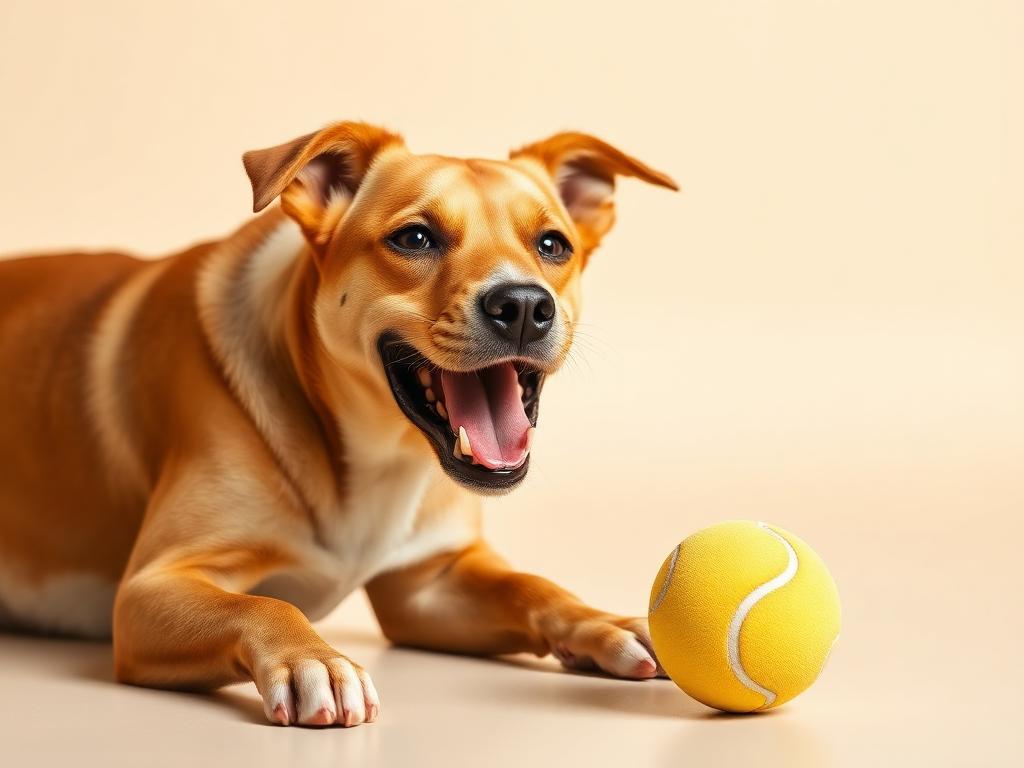
"Drop it" is the partner of "leave it". Trained differently: the object is already in his mouth and the challenge is to teach him that dropping is better than holding. Force creates resource guarding.
What you get
- Removes dangerous items without struggle
- Prevents resource guarding
- Makes toy play smoother
A dog that drops on cue is a dog you can trust with any toy.
Before you start
- · Tolerates having objects in his mouth with your hand nearby
Materials
- · Two identical toys
- · Very high-value treats
Step by step
- 1
Simple exchange
Give him a meh toy. When he has it, show a super treat near his nose. Most dogs drop instantly. The moment he drops, say "drop" and treat.
- 2
Two identical toys
Play with one. When he's into it, pull out the second and move it. To get the second, he has to drop the first. Mark "drop" the exact moment.
- 3
Generalize with worse objects
Practice with a sock, paper, remote. Same exchange.
- 4
Without physical reward, just word
When response is 90%, ask "drop" without showing a treat first. If he drops: big verbal party and petting. Then occasional treat.
Common mistakes
- Yanking the object out (creates resource guarding)
- Only asking drop for bad things (then he learns to hide)
If something isn't working
He drops and re-grabs before you can treat
→ Improve your timing. Mark "yes!" the millisecond the object leaves his mouth, not after.
Pro tips
- Practice drop in everyday play, not as an isolated exercise. He'll learn that dropping keeps the fun going.
Deep dive
The drop cue is essential for preventing the development of resource guarding — one of the hardest behaviour problems to reverse. Trained well from puppyhood, it prevents emergency vet visits for swallowed objects.
Other exercises in this level
Loose-leash walking
Possibly the most frustrating exercise of all. Also the one that improves your daily life the most.
Teach your dog to heel
The difference between not pulling and formal obedience.
Teach "leave it"
What separates a trained dog from a four-legged vacuum cleaner.
Teach shake / give paw
Everyone's favourite party trick.
Wait at the door
The most cost-effective rule: 10 seconds before every walk.
Go to bed / crate
A safe place your dog goes to on cue when you need him there.