Loose-leash walking
Possibly the most frustrating exercise of all. Also the one that improves your daily life the most.
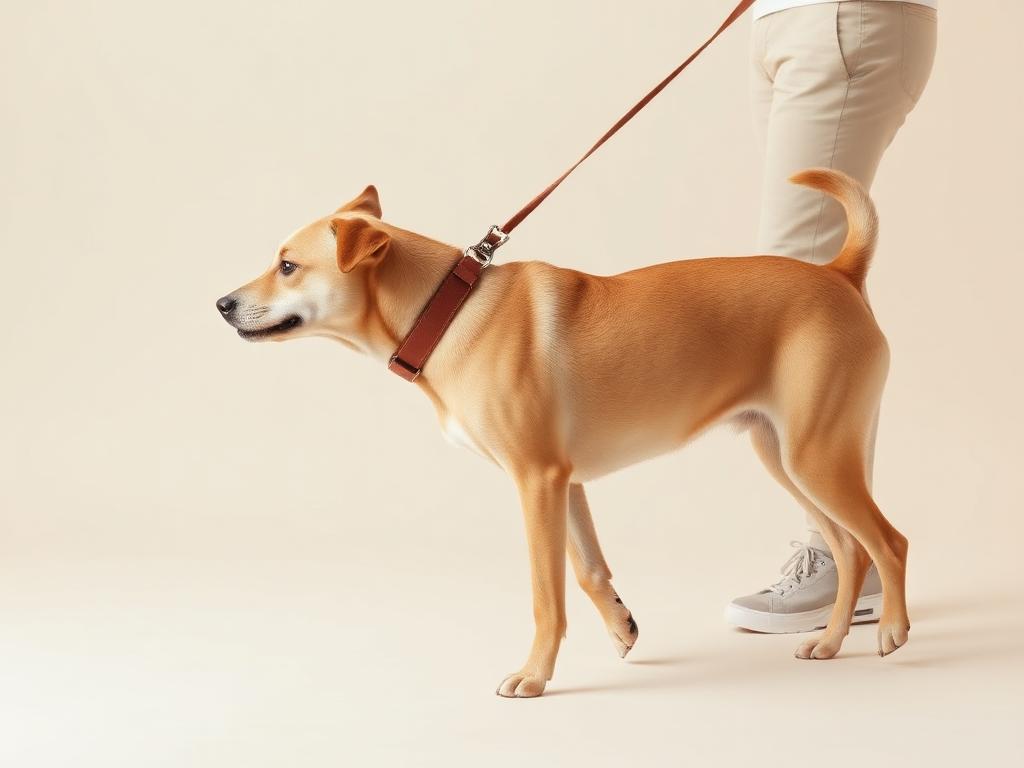
Pulling on leash isn't fixed by one magic tug or by an anti-pull harness. It's fixed by teaching your dog that pulling never, ever works. It's slow work, 2-4 weeks, with the most basic rule: if he pulls, you don't move forward.
What you get
- Relaxed walks
- Your back and shoulders will thank you
- Less frustration-driven reactivity
A pulling dog turns every walk into a punishment for both of you.
Before you start
- · Knows his name
- · Accepts leash and harness
Materials
- · Y-shape harness (not neck collar)
- · Fixed leash 1.5-2 m (no flexi)
- · Treat pouch
Step by step
- 1
Charge the correct position
At home or garden, put him at your side off-leash. Every time he takes a step staying glued to you, mark and treat. Repeat 20 times.
- 2
Hit the street with the golden rule
Start the walk. At the first pull, you stop dead like a statue. No harder pull: wait. The second the leash slackens (because he turns or looks), take a step. He pulls again: stop again.
- 3
Change direction
If stopping doesn't work and he gets frustrated, alternative: turn around without warning and walk the other way. He learns that pulling means never getting there.
- 4
Reward eye contact
During the walk, whenever he looks at you on his own, instant treat. You're building "look at me, don't pull".
- 5
Generalize with distractions
Walk near dog parks, markets, café terraces with food. If he pulls, you stop. This is what separates a trained dog from one that only behaves on empty streets.
Common mistakes
- Allowing "just a little" pulling
- Changing the leash every week
- Using choke or prong collars
- Verbally punishing the pull
If something isn't working
He pulls toward other dogs
→ Increase distance from the other dog and reward looking. You approach only when he looks back at you.
Walks fine with you, bad with someone else
→ The rule only works if EVERYONE who walks the dog follows it. Without consistency, no learning.
Pro tips
- First 5 minutes is potty time; the "training walk" starts after.
- A well-fitted Y harness changes pulling mechanics: doesn't cure, but helps.
Deep dive
Loose-leash walking is probably the most universal training challenge among dog owners. The "tree" technique (stopping when he pulls) combined with direction changes and rewarding eye contact solves the problem in 2-4 weeks if applied consistently.
Other exercises in this level
Teach your dog to heel
The difference between not pulling and formal obedience.
Teach "leave it"
What separates a trained dog from a four-legged vacuum cleaner.
Teach drop it
When it's already in his mouth, what matters is that he lets go without a fight.
Teach shake / give paw
Everyone's favourite party trick.
Wait at the door
The most cost-effective rule: 10 seconds before every walk.
Go to bed / crate
A safe place your dog goes to on cue when you need him there.